NAPEO
YOU CAN’T SPELL PEO WITHOUT PEOPLE
Why the Future of the Industry Is Still Dependent on Its Most Valuable Resource
April 2026
Let’s be honest: the world of human resources and PEOs can sometimes sound a little robotic. Between compliance, risk management and benefits administration, it is easy to become buried under industry jargon and cold, serious-looking spreadsheets. But if you strip all of that away, what sits at the very center? People.
As we transition into a new era where artificial intelligence and automation dominate the headlines, a familiar concern has resurfaced across the industry: are the machines coming for our jobs? The chief U.S. economist at J.P. Morgan, Michael Feroli, recently noted that “the discussion about AI taking jobs, or at least good jobs, is generally framed as tomorrow’s problem.”
AI is not a rogue force from a sci-fi movie; it is simply the latest iteration of tools designed to help professionals work smarter. According to a 2024 report by McKinsey, AI has the potential to be as transformative as the steam engine was to the 19th-century Industrial Revolution. The key word here is transformative, not eliminative.
History proves that technology acts as an assistant, not a replacement:
- Excel didn’t eliminate finance teams.
- SQL didn’t make analysts obsolete.
- Power BI didn’t replace decision-makers.
Instead, these tools stripped away manual effort to create space for higher-value work: strategy, judgment and relationship-building.
THE UNREPLACEABLE HUMAN TOUCH
While AI is undoubtedly a gamechanger, our industry is living proof that technology alone isn’t enough. Success depends on deep-rooted human connectivity, flexibility and know-how.
At Justworks, I’ve seen this commitment firsthand. We leverage expertise to help business owners navigate complex workforce challenges so they can grow, adapt and remain resilient. While technology can process payroll with lightning speed, it cannot reassure a business owner facing economic uncertainty, intuitively understand organizational culture, or build the trust that sustains a long-term partnership.
WHEN IT MATTERED MOST
During the COVID-19 pandemic, the PEO difference moved from a theoretical benefit to a lifeline. Research conducted by McBassi & Company quantified this impact with striking clarity:
- Survival: Businesses partnering with PEOs were 58% less likely to close permanently.
- Resilience: PEO clients were 32% less likely to experience a negative overall impact.
- Funding: PEO clients were 71% more likely to receive PPP loans and 18% more likely to have them forgiven.
At Justworks, this commitment to going “above and beyond” was best defined by our fight for the Employee Retention Tax Credit (ERTC). While others waited for clarity, our team mobilized—navigating the shifting legal landscape and traveling directly to the Capitol with our customers to ensure their survival was a national priority. By giving our community a voice in the halls of power, we didn’t just facilitate a process; we secured an additional $374 million for our customers to reinvest, rebuild and recover.
BRINGING AI TO SCALE
The true promise of AI lies in its ability to relegate mundane, repetitive tasks to the past. K-Ann Wilson, Senior Director of Payroll Tax & Unemployment Operations at Justworks, championed this potential in her February 2024 PEO Insider article, ‘AI within UI,’ noting that “the infusion of AI into the unemployment sector holds the key to unlocking a multitude of advantages.”
I agree wholeheartedly with Wilson’s assessment: AI is an essential catalyst for the next era of our industry. However, we must recognize that reaching this horizon is not an automated process. It requires countless hours of human-driven coding, sophisticated software engineering, and rigorous cost-benefit analysis. Realizing AI’s potential often demands a complete overhaul of outdated infrastructure—a transition that is impossible without human stakeholders to navigate the complexities. Without the PEOple behind the technology, the benefits of automation remain purely theoretical. Ultimately, we are at our best not when we are replaced by machines, but when our human expertise is amplified by them.
The future of the PEO industry is not a binary choice between human expertise and automation; it is a powerful partnership. In every major technological shift—from Y2K to the present—we didn’t just survive; we adapted. The PEO industry will continue to thrive if we remember that technology is the tool, but people are the beacon. We will always be at our best when there are people working alongside AI.
-
SHARE
- Copy to clipboard
RELATED ARTICLES

MEET CONGRESSWOMAN ERIN HOUCHIN
Voters in Indiana’s 9th Congressional district elected Congresswoman Erin Houchin to serve in the United States House of Representatives in November 2022. In doing so, Rep. Houchin became the first woman elected to Congress from her district. She also holds the distinction of being the only person elected to Congress who has worked for a PEO.Rep. Houchin spoke to PEO Insider about her decision to seek public office, her experience working for a PEO, and the policies she champions.
BY Chris Chaney
May 2023
2023 DIGITAL TRENDS
Lorem ipsum is simply dummy text of the printing and typesetting industry. Lorem Ipsum has been the industry’s standard dummy text ever since the 1500s, when an unknown printer took a galley of type and scrambled it to make a type specimen book. It has survived not only five centuries, but also the leap into …
BY James Joyce
June/July 2023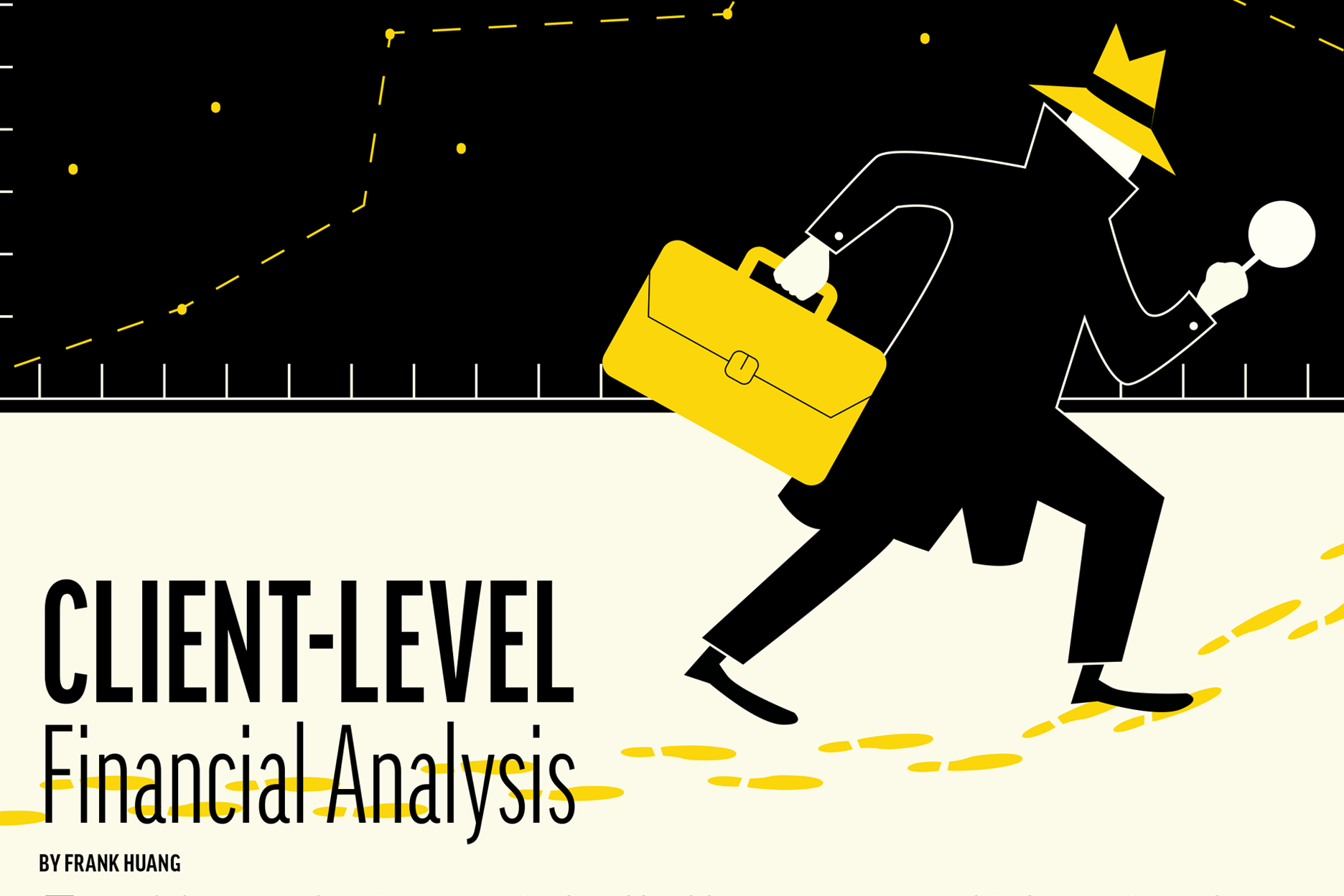
CLIENT-LEVEL FINANCIAL ANALYSIS
If you asked someone in the PEO space what he or she thought of actuarial science a positive response might be reserve analyses or accruals. A negative response might be collateral calls or rate increases. Naturally, the varied reactions stem from whether there is positive or negative news coming from the work of the actuary. Yet, one of the most helpful projects an actuary can perform for a PEO, eliciting either positive and negative reactions, is a client-level financial analysis.
BY FRANK HUANG
June/July 2023
PROFITABILITY ABCs: IT IS AS EASY AS 1-2-3
The article provides some simple guidance for streamlining operations (thus reducing selling, general, and administrative (SGA) costs) and increasing gross profit contribution from their existing client base. For the purpose of this article, we are only exploring pricing strategies that affect client profitability and operating efficiency items that impact select SG&A cost categories. Business development and organic growth are excluded from this discussion.
BY Dan McHenry
June/July 2023ADVERTISEMENT