
NAPEO
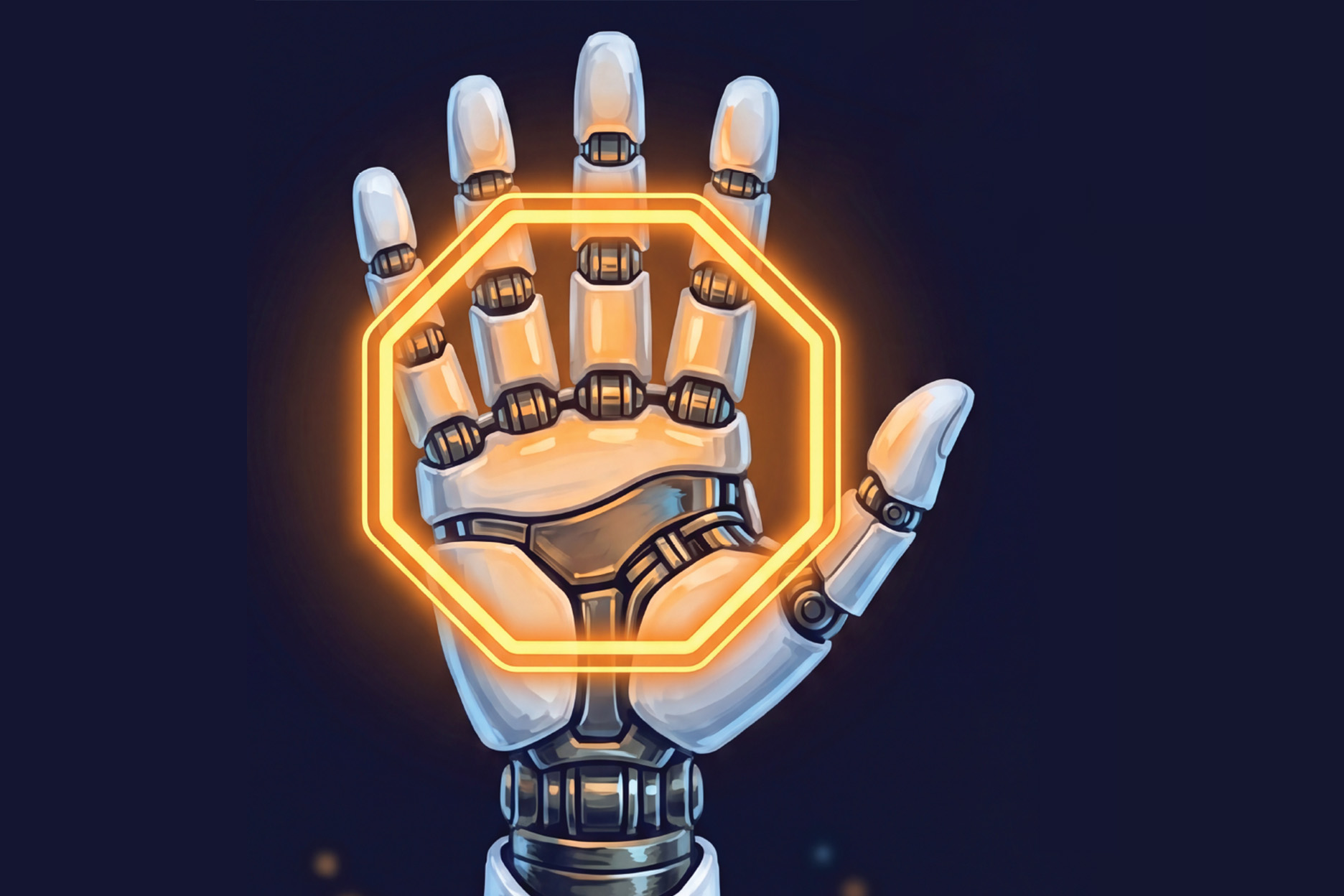
In 2026, the companies pulling ahead with AI agents are the ones deliberately limiting what those systems are allowed to do.
Gartner projects that by 2027, roughly 40% of enterprises will demote or decommission their autonomous AI agents, and it pins most of that retreat on governance gaps discovered only after something goes wrong in production.
That runs against the dominant story about AI, which celebrates raw capability: bigger models, broader autonomy, more tasks a system can handle without a human involved. For the first few years of generative AI, the defining question was what these systems could produce: an email, an image, a line of code, or a financial model.
But the harder question that matters more is what we’re willing to let AI be responsible for.
GENERATION VS. ACCOUNTABILITY
If an AI writes a mediocre ad, you regenerate it. If it summarizes a meeting incorrectly, you fix the notes.
But if a system running payroll gets someone’s tax withholding wrong, misses a benefits enrollment, or sends $600,000 where $60,000 was owed, you can’t just hit regenerate. The mistake becomes a real financial loss, and damages your credibility.
That’s exactly why the PEO industry is one of the most revealing places to watch responsible AI take shape. Here, the most valuable AI is the most disciplined: it understands one domain deeply, flags what doesn’t add up, and hands the consequential decision to a human.
THE MOST USEFUL AI OFTEN KNOWS LESS
For most of the AI industry, “capability” means breadth; more parameters and modalities. High-consequence work flips that definition on its head. Sometimes the system that knows less is the one you can trust.
Consider medicine’s first fully autonomous diagnostic. In 2018, the FDA granted De Novo authorization to an AI system, now called LumineticsCore, to detect diabetic retinopathy from retinal images with no physician reviewing the results.
What made it trustworthy wasn’t breadth. It was restraint:
- It was validated in a prospective clinical trial.
- It diagnoses one condition rather than reasoning about everything.
- It refuses to return a result when image quality is too poor to be sure.
Its intelligence includes knowing the edge of its own competence.
Payroll rewards the same design. It doesn’t need a model that can debate philosophy or draft a screenplay. It needs deep context: the company, the employee, prior pay periods, the applicable rules, and the specific action it’s been asked to take. And it needs to know which data source is authoritative, and which decisions it isn’t permitted to make alone.
AUTOMATION IS NOT ENOUGH
Payroll math has been automated for decades. With clean inputs, software computes gross-to-net pay, deductions, and employer obligations with enormous precision.
The hard part is judging whether the inputs make sense in the first place.
Say an employee’s gross pay comes in 18% higher than last period. The engine may be working perfectly, but why did the number change? Was it a raise, overtime, commission, or a duplicated entry? And was the change even supposed to land in this run?
Traditional software executes instructions. Modern payroll operators do something more: they scan across the information and ask whether it holds together.
Modern fraud detection recreated that instinct at scale. Banks no longer lean on rigid rules alone. Their models learn what normal behavior looks like for each customer, score every transaction against it, and then take one of three actions:
- Approve it
- Route it to a human for review
- Decline it
The goal isn’t to replace the analyst. It’s to surface the handful of transactions that warrant a second look. Payroll needs that same layer of reasoning wrapped around a calculation that must stay exact.
A SYSTEM THAT REFUSES CAN BE THE INTELLIGENT ONE
Much of the AI industry has poured its energy into making models better at answering. High-consequence environments demand a less celebrated skill: the ability to stop.
Most modern fly-by-wire aircraft have this built in. Airbus and Boeing flight control computers apply flight envelope protection, restricting control inputs that would push the aircraft past its safe structural or aerodynamic limits, and handing control back to the pilots when a sensor can no longer be trusted.
Payroll and HR are full of moments that call for exactly that restraint:
- Two compensation records that disagree on the effective date of a raise.
- A benefits deduction with no matching enrollment.
- A worker classification that conflicts with other employment data.
- A change in work location that may create a new state tax obligation.
A system optimized purely for task completion would guess and move on. A system designed around responsibility recognizes that the ambiguity itself matters; it explains the conflict, names the sources, and asks for the missing decision before continuing.
That’s automation working correctly.
WHERE THIS GETS REAL FOR PEOS
PEOs and payroll providers exist, in large part, to carry the responsibilities employers would otherwise shoulder alone: pay, employment taxes, benefits, and compliance across a growing map of jurisdictions.
When intelligent systems start performing that work, they inherit a much higher design standard. Accuracy still matters, but so do:
Provenance: where the data came from
Permissions: what the system is authorized to do
Auditability: a traceable record of every action
Escalation: a clear path to a human when it counts
This is the logic behind EMMA, the AI layer within Niural PEO, which validates payroll before the run, flagging missing rate changes or misclassification risk instead of quietly pushing them into production. What matters isn’t the model’s cleverness. It’s the boundaries around it, which make the work more reliable instead of more opaque.
WHAT “AI-NATIVE” SHOULD MEAN
The term “AI-native” is fast becoming broad enough to mean almost anything. In employment operations, it should mean something specific.
It does not mean:
- Replacing deterministic systems with probabilistic ones
- Bolting a chatbot onto an HR platform
- Granting an agent unlimited authority just because the underlying model got more capable
An AI-native employment system combines different kinds of intelligence according to the consequence of each task:
- Deterministic calculation where the answer must be exact
- AI reasoning where information has to be interpreted across systems
- Rules where regulation sets a clear requirement
- Historical context where anomalies need to be caught
- Permissions where actions carry weight
- Human judgment where the system meets ambiguity it can’t responsibly resolve
The hard part isn’t choosing between people, software, and AI. It’s designing the boundaries between them.
Done right, purpose-built AI expands the human role rather than shrinking it. Payroll and HR teams stop spending their days catching what the old software let slip, and start operating with more range and more confidence, because a well-designed system carries more of the load and is honest about where its authority ends.
That’s the version of AI we are building at Niural, and across this industry: intelligence designed around responsibility.
CAPABILITY ALONE IS AN IMPERFECT MEASURE OF PROGRESS
The public conversation stays fixed on how powerful general-purpose models might become. That’s a real question. But the more immediate test is whether AI can move from the edges of work into the systems that actually run a business.
There, capability alone is an incomplete measure of progress. The system also has to:
- Understand context
- Operate within permissions
- Separate inference from fact
- Show where its information came from
- Recognize uncertainty
- And, sometimes, stop
Payroll happens to sit at the exact intersection of all six. Money has to move. Taxes have to be right. Benefits have to work. And employers want all of that complexity to disappear behind a single, simple intention: I want to hire this person.
The opportunity is to build systems capable enough to let people take on more, and disciplined enough to know the boundary. For payroll and the PEOs built around it, that boundary is where most agentic systems need to spend time to be trustworthy.
-
SHARE
- Copy to clipboard
RELATED ARTICLES
2023 DIGITAL TRENDS
Lorem ipsum is simply dummy text of the printing and typesetting industry. Lorem Ipsum has been the industry’s standard dummy text ever since the 1500s, when an unknown printer took a galley of type and scrambled it to make a type specimen book. It has survived not only five centuries, but also the leap into …
BY James Joyce
June/July 2023
AI IN CYBERSECURITY: THE GOOD, THE BAD AND BEING ON THE PRECIPICE OF A NEW ERA IN TECHNOLOGY
As you might expect with cybersecurity, battlelines are being drawn between the people creating AI solutions to help protect companies and the people making AI software that is designed to find vulnerabilities in areas designed to protect data; systems; financial and personal information; intellectual property (IP); and Industrial Internet of Things (IIoT) and other IoT devices.
BY Dwayne Smith
September 2023
ASK THE EXPERT: A Q&A WITH PAUL NASH OF BEAZLEY
Paul Nash is an employment practices liability (EPL) underwriter with Beazley. He is the EPL and Safeguard product leader for both the UK and US teams and was instrumental in developing the first SAM/SML policy issued by Beazley in 2006. He has more than 30 years of experience in the insurance. He recently spoke with Paul Hughes of Libertate Insurance about the state of the EPLI market, how he has seen the PEO industry evolve and more. PEO Insider captured their conversation.
BY PAUL HUGES
August 2023
WHY CYBERSECURITY SHOULD NOT BE THE SOLE RESPONSIBILITY OF THE IT DEPARTMENT
Cybersecurity is an essential aspect of business operations, which is why it cannot be viewed as the sole responsibility of the IT department. Cybersecurity threats evolve daily and organizations can best prepare and protect themselves by taking a shared responsibility to protect the company’s assets and data.
BY Jenna Marceau
March 2023