
NAPEO

For Andy Lubash, the path to the PEO industry began with a client’s question.
Trained as a research analyst, he built a career in finance after college and eventually opened his own broker-dealer and securities firm. Clients began asking about more than investments as time went by. They wanted help understanding their medical insurance, especially as premiums climbed and employee benefits became a more urgent concern for employers.
At first, Lubash referred those questions to a benefits agency in his office building. But when he saw that those referrals were turning into meaningful business, he did what research analysts do: he studied the market.
“I can learn anything. Instead of reading a financial statement, I can learn a benefits booklet,” Lubash thought.
He did more than learn it. He built a benefits agency, serving clients ranging from very small businesses to companies with thousands of employees. As the business grew, so did the scope of the questions clients brought to him. COBRA. Maternity leave. Employment issues. HR questions. Legal questions. The benefits conversation had become something larger.
Lubash and his partner considered hiring a labor attorney and a vice president of HR to support their clients and differentiate the agency. A friend in Florida told them there was already a name for what they were describing: a PEO. He pointed them to NAPEO and the rest is history.
Lubash launched PrestigePEO in 1998. Nearly 30 years later, the company has grown into a large PEO with a national footprint, an expanding executive team, a successful acquisition strategy and a culture its leaders describe as intensely personal. For all that has changed, Lubash insists the foundation has not.
“This is still a people business,” he says.
A Broker-Channel Bet
PrestigePEO’s early growth was shaped by a strategic decision to build the company around the broker channel.
At the time PrestigePEO was founded, the internet was beginning to change the way insurance carriers and employers interacted. Carriers were starting to explore selling group benefits online, and Lubash saw a threat to the traditional benefits broker model. If employers could buy benefits directly, he reasoned, brokers needed a new way to remain relevant and valuable.
PrestigePEO became that solution.
Rather than compete with brokers for client relationships, PrestigePEO positioned itself as a partner. Brokers could bring clients to PrestigePEO while maintaining their relationships and continuing to provide value. The model worked because it was built on alignment. Brokers brought opportunities they believed were a true fit, and PrestigePEO became accountable not only to the client but also to the broker.
That dual accountability, Lubash says, has helped drive strong retention. If PrestigePEO fails a client, it risks losing the broker relationship as well. That makes service more than a promise; it becomes the core of the business model.
The approach helped PrestigePEO grow for decades largely through organic growth. That changed about five years ago, when Lubash’s partners decided to retire and the company began evaluating options. After exploring several paths, PrestigePEO partnered with a private equity sponsor to support its next stage of growth.
Since then, PrestigePEO has continued to grow organically and pursue PEO acquisitions. The company is interested in growth, but not at the expense of fit.
“We want people that fit,” Lubash says. “This is one large family.”
Growth Without Losing the Feel
Robyn Rusignuolo joined PrestigePEO in 2023 after 15 years in the PEO industry, with experience spanning legal and operations roles. The opportunity to join PrestigePEO was attractive because of the company and culture that Lubash had built, she says.
“I was drawn to Prestige’s culture of accountability and performance, as well as the opportunity to work with a fun, dynamic team,” Rusignuolo says.
She describes PrestigePEO as a rare combination: a 30-year-old company still founder-led, still growing and private equity-backed. That combination has created exciting opportunities to pursue organic growth, M&A transactions and new market entry.
PrestigePEO’s executive team reflects that evolution. Leaders have joined from different parts of the industry and through different paths, including acquisition. Rusignuolo sees that as part of Lubash’s commitment to building a best-in-class team that can help the company continue scaling without losing what made it successful. In addition to Lubash (CEO) and Rusignuolo (COO), Lori Martin joined PrestigePEO as its chief financial officer after a decade leading finance operations at a large national competitor. Industry veteran Heather Keefer Saulsbury joined the executive team through an acquisition and now serves as the company’s chief strategy officer rounding out the executive leadership team.
The leadership team represents varied experiences within the PEO industry which combine to create a dynamic group of leaders focused on propelling the company into its next chapter.
Central to that effort is PrestigePEO’s M&A approach. The company is not looking to buy businesses, strip them down and impose a rigid model. It looks for strong regional operators, management teams, products, services and processes that can make the broader organization stronger.
Rusignuolo notes the company’s acquisition strategy has allowed PrestigePEO to enter strategic regional markets and gain local expertise while preserving what made acquired companies valuable in the first place.
“It’s truly a partnership,” she says. “We’re interested in leveraging Prestige’s capabilities to build upon what they do well.”
That requires discipline. PrestigePEO has built a formal integration playbook, supported by an integration team, with a process that begins before a transaction closes. That process is designed around communication, transparency, project planning, and collaboration with acquired-company leadership.
The goal is not simply to migrate systems and consolidate operations. It is to create a positive outcome for everyone involved.
“Values alignment” is essential, Rusignuolo says. Sellers should acknowledge what outcomes they are seeking through a transaction, and buyers and sellers need open communication so there are no surprises before or after closing.
Lubash is equally direct about the challenges of the M&A process. He knows due diligence can be exhausting. He has been through the spreadsheets, the questions, the fatigue and the feeling that the process will never end. That experience shapes how PrestigePEO approaches sellers today. The company seeks to run an efficient, transparent process and identify material issues as early as possible.
For Lubash, acquisitions are not just financial transactions. They are relationships. He prefers operators who want to stay, contribute and continue building.
Boutique Service at Scale
PrestigePEO’s leaders repeatedly return to one theme: service. The company has grown, but Lubash says it still operates with what he calls a “large PEO with a boutique model” mindset.
One example is the company’s accessibility. Lubash describes a commitment to answering phones and returning calls quickly. He is blunt about why that matters. Clients do not want to fight through automated systems when they need help with a payroll, HR, benefits, compliance or employee issue.
PrestigePEO’s service model is built around teams that include an HR business partner, benefits specialist, payroll specialist, risk manager and retirement plan specialist. Importantly, those experts are accessible not only to the employer but also to employees. The goal is to get questions answered quickly by the person best equipped to answer them.
That model requires careful consideration to scale successfully, but Lubash says PrestigePEO has been able to preserve the feel of a smaller PEO while delivering the resources and capabilities of a larger one. Clients are provided with direct access to dedicated service professionals rather than relying primarily on a traditional call-center model.
Rusignuolo says that commitment to client experience has been consistent from the company’s earliest days. Technology, benefits, and service delivery methods continue to evolve, but the “why” remains the same: deliver a great product and a great client experience.
That philosophy is now shaping how PrestigePEO thinks about artificial intelligence.
AI as an Enhancer, Not a Replacement
Like every business, PrestigePEO is looking closely at AI. Lubash and Rusignuolo both see enormous potential, but both emphasize that AI must support the company’s service model rather than replace it.
Lubash sees AI as a tool for efficiency and speed. PrestigePEO has already begun deploying AI-supported tools to significantly improve the speed and consistency of its proposal process. He expects AI to help the company increase capacity, improve responsiveness and support continued growth without compromising service quality. But he does not view AI as a replacement for human expertise.
“You still need someone to pick up the phone when an employer has a problem with an employee,” he says.
Rusignuolo frames the issue similarly. PrestigePEO’s executive team is executing its AI strategic plan, assessing opportunity across departments, prioritizing and implementing use cases, and focusing on practical wins. The company wants to move quickly enough to remain an innovator, but not so quickly that it moves blindly.
For Rusignuolo, the right AI strategy must align with PrestigePEO’s values. It should improve speed to service, speed to sale, quality of work and employee job satisfaction.
“It’s not a job eliminator,” she says. “It’s a job enhancer.”
The company is also watching how AI may affect broader workplace dynamics. Interest in blue- and gray-collar work is rising as employees and employers think differently about the future of work. PrestigePEO has responded in part with PrestigeBLUE, a curated service offering focused on blue- and gray-collar clients. The model tailors service, underwriting and support to businesses whose needs may differ from PrestigePEO’s traditional base of white-collar clients.
For PrestigePEO, that offering reflects a broader strategy: expand into new markets and segments while leveraging the expertise already present across the organization, including experience gained through acquisitions.
“PrestigeBLUE is a wonderful example of acquisition success. The model was born through varying sales model prioritization. We appeal to the referral sources in property and casualty, in addition to our benefit partners,” Chief Strategy Officer Heather Saulsbury explains.
“We will continue to prioritize this unique strategy of embracing the “one size does not fit all” growth model,” she adds.
Culture That Travels
As PrestigePEO grows across geographies, culture becomes both more important and harder to maintain. Lubash and Rusignuolo both describe the company as a family. They connect that culture to accountability, performance, service and fit.
“We work to empower our employees to drive the client experience. Our culture is one that is led by example. The leadership team is hands on, present and energized for our next phase of growth,” Chief Financial Officer Lori Martin adds.
Lubash points to employee tenure as evidence. Some employees have been with PrestigePEO for over two decades. He also points to company events designed to bring people together across locations, including a summer event hosted in New York. For this event, employees convene for a day filled with team building exercises including the highly competitive water ballon toss. It’s a chance for employees, including those from acquired entities, to engage with individuals they may not work directly with to build stronger relationships across the organization. Ultimately, it’s a reflection of Lubash’s founding principle: this is a people business. Taking care of employees and clients alike is the company’s north star.
“Happy employees help create and retain happy clients. Take care of your people,” Saulsbury believes.
That culture extends beyond the workplace. PrestigePEO has a long-standing commitment to community involvement, supporting nonprofits, client organizations and causes across Long Island, New York, and beyond. Employees participate in volunteer days, charitable walks, and community events. Lubash is personally involved with organizations supporting Alzheimer’s and dementia causes.
Community engagement, Rusignuolo says, is not a side project. It is a foundational value.
The Next Chapter
PrestigePEO’s growth story mirrors the industry’s broader trajectory. The company has evolved from a benefits-driven idea into a large, sophisticated PEO. It has expanded through organic growth and acquisitions. It is investing in AI, new markets, specialized service offerings and executive leadership. Yet its leaders say the same principles still drive the company: relationships, service, accountability, culture and trust.
For Lubash, the future will bring new technology, new compliance challenges, new acquisition opportunities and new ways to serve clients. But the heart of the business will remain familiar.
People still need advice. Employers still need someone to call. Employees still need answers. Business owners still need partners who understand the weight of what they are carrying.
That is what brought Lubash into the PEO industry in the first place. And nearly three decades later, it is still what drives PrestigePEO forward.
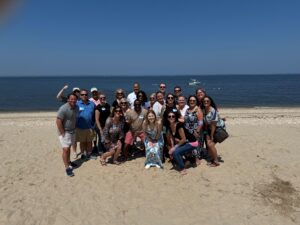
PrestigePEO team members at the annual summer event.
-
SHARE
- Copy to clipboard
RELATED ARTICLES

MEET CONGRESSWOMAN ERIN HOUCHIN
Voters in Indiana’s 9th Congressional district elected Congresswoman Erin Houchin to serve in the United States House of Representatives in November 2022. In doing so, Rep. Houchin became the first woman elected to Congress from her district. She also holds the distinction of being the only person elected to Congress who has worked for a PEO.Rep. Houchin spoke to PEO Insider about her decision to seek public office, her experience working for a PEO, and the policies she champions.
BY Chris Chaney
May 2023
2023 DIGITAL TRENDS
Lorem ipsum is simply dummy text of the printing and typesetting industry. Lorem Ipsum has been the industry’s standard dummy text ever since the 1500s, when an unknown printer took a galley of type and scrambled it to make a type specimen book. It has survived not only five centuries, but also the leap into …
BY James Joyce
June/July 2023
CLIENT-LEVEL FINANCIAL ANALYSIS
If you asked someone in the PEO space what he or she thought of actuarial science a positive response might be reserve analyses or accruals. A negative response might be collateral calls or rate increases. Naturally, the varied reactions stem from whether there is positive or negative news coming from the work of the actuary. Yet, one of the most helpful projects an actuary can perform for a PEO, eliciting either positive and negative reactions, is a client-level financial analysis.
BY FRANK HUANG
June/July 2023
PROFITABILITY ABCs: IT IS AS EASY AS 1-2-3
The article provides some simple guidance for streamlining operations (thus reducing selling, general, and administrative (SGA) costs) and increasing gross profit contribution from their existing client base. For the purpose of this article, we are only exploring pricing strategies that affect client profitability and operating efficiency items that impact select SG&A cost categories. Business development and organic growth are excluded from this discussion.
BY Dan McHenry
June/July 2023