NAPEO
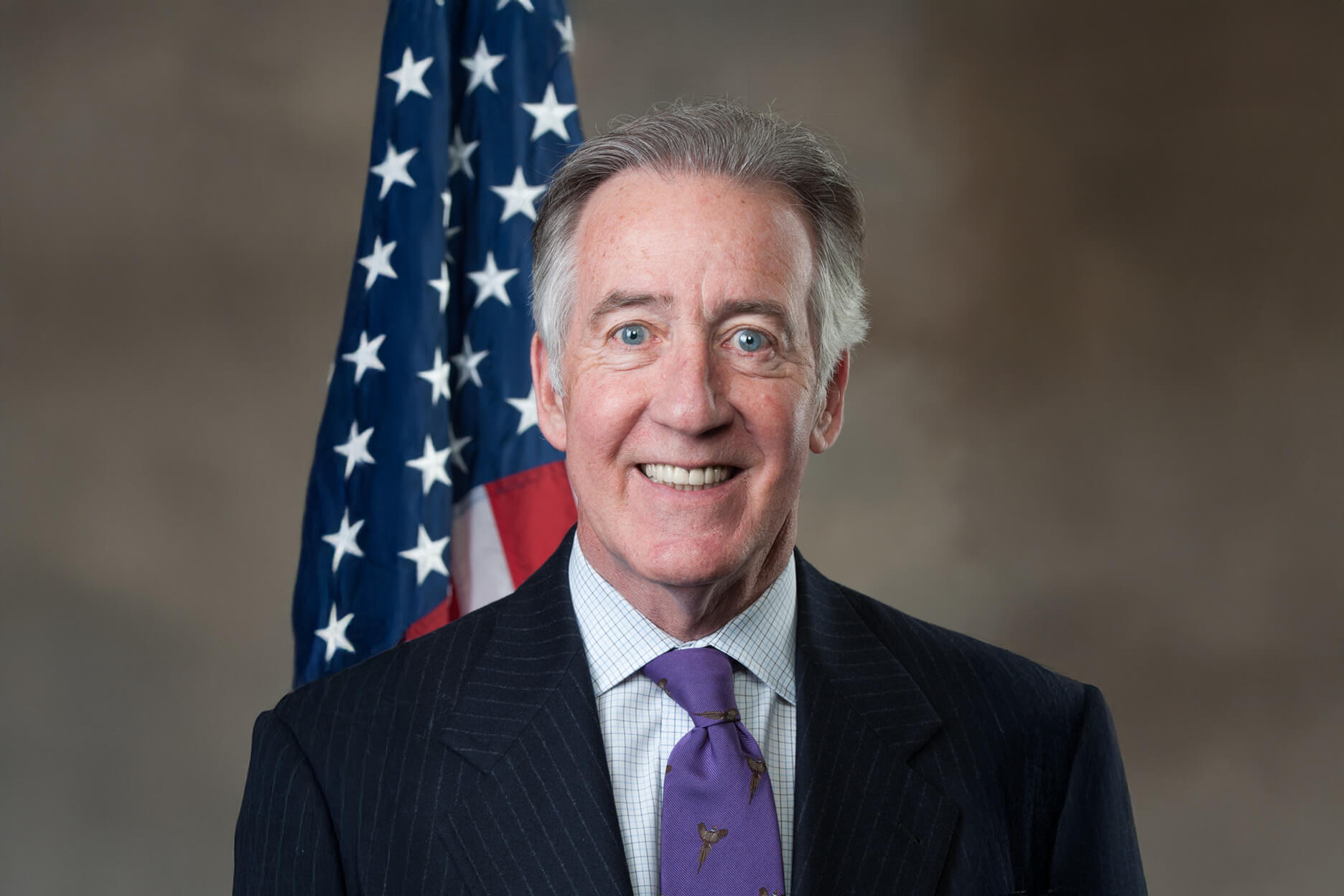
Congressman Richard Neal (D-MA) has served Massachusetts in the U.S. House of Representatives since 1988. He has served most of that time as a member of the Ways & Means Committee and served as committee chairman from 2019 until 2023. He currently serves as the committee’s ranking member. He spoke with NAPEO Vice President of Federal Government Affairs Kyle Kizzier about why public service matters, his policy priorities and why he fights for American workers.
Kyle Kizzier: What first motivated you to seek public service?
Rep. Neal: My mom was a switchboard operator, but she was quite knowledgeable about politics and involved in a lot of campaigns. From conversations at the dinner table I always seemed to know who was running for what. It was infections, I think.
I also was inspired when I saw Jack Kennedy the day before the election in 1960. He finished that campaign in three places: Waterbury, Connecticut; Springfield, Massachusetts; and Boston. My grandmother took me, along with my sisters, to the steps of the city hall to see him. The sense of idealism and can-doism was inspiring.
KK: As Ways & Means ranking member you have a big influence on tax and workforce policy. What are you focused on most right now?
RN: I certainly am focused on the [2025 tax] bill largely because of the impact it’s likely to have on my constituents, particularly in healthcare. I would note the job growth that came last year in America was fairly flat, with the exception of healthcare. And in Massachusetts, that’s a big deal.
It’s also important to remember that most hospitals are more than half dependent on Medicare, and in some cases, closer to 75% between Medicare and Medicaid. Making sure that people have access to quality healthcare is very important.
KK: What is something you feel really defines your public service career?
RN: You know, a challenge we have now, as opposed to when I started way back, is there is less emphasis on achievement in Congress. There’s less emphasis on what you’ve got done. Social media now not only highlights conflict, but causes the media to cover noise instead of actual accomplishments.
I was a lead negotiator during the USMCA (United States, Mexico, Canada Agreement) negotiations, and I did it with a republican United States Trade Representative. It’s the largest trade agreement in the history of the world. We came up with a good plan that many Democrats and Republicans voted for. SECURE 2.0 in the retirement space and the Inflation Reduction Act are also big legislative achievements.
I tell people with great satisfaction, in a time when everybody is questioning whether a hospital is going to close or merge with another, I got one opened. The experiences that I’ve had make me a champion and an advocate for my district.
KK: What are small business owners in your district telling you worries them the most?
RN: I hear a lot of concern about the tariff issue. Some businesses are reluctant to pass some of the costs on to customers because they are afraid people will postpone coming in.
I understand that the threat of a tariff could be a very important political tool as well as a policy consideration, and I understand what steel dumping does. So, targeted tariffs from time to time can make sense, but this notion that every economic challenge we have could be answered by simply imposing a new tariff is not workable. You never know from day to day where the tariffs are headed, and then businesses don’t know how to plan for expenditures and investments.
KK: IRS modernization is something everyone can support. Why does this matter to taxpayers?
RN: People must have faith in the Internal Revenue Service. It’s not a republican or a democrat agency. It needed a serious investment, and we provided that with the Inflation Reduction Act’s $80 billion for upgrades. We have a very high voluntary compliance rate in America. I think about 87% of the American people pay their taxes on time. We provided the IRS more personnel which could be helpful in terms of constituent service. If I have an IRS issue from a constituent that writes to me or calls me, we will contact the IRS.
KK: Can you explain the importance of constituent casework?
RN: It’s a big deal. The IRS will give due consideration, not favorable consideration, but due consideration to requests that come from a congressional office. They will try to work with the taxpayer to point out what might be accurate or inaccurate and work out a way to resolve the issue.
KK: Why are you a champion of expanding access to retirement savings accounts?
RN: That half of the American people who go to work every day are not in a qualified retirement plan should get our attention. I was raised on social security survivor benefits by my aunt and my grandmother. I understand the value of Social Security. I don’t know what my family would have done without it.
I think that the tax system ought to treat retirement savings favorably. Getting people to set aside money for retirement can be challenging. If you’re in your 30s, 40s, or even 50s, and you’re trying to send children to college, you might hold off on making retirement plan payments. In SECURE 2.0, we allowed what are known as catch-up provisions. That’s a big deal. So, what you couldn’t set aside between your 30s and 40s and maybe early 50s, you could favorably catch up at tax deferred status.
I also like the auto-IRA plan proposals and concept that many states have adopted. Compelling a 25-year-old male to set aside retirement savings is not an easy consideration, but the earlier you get started saving, the better off you are. One of the best things about the auto-IRA proposal is it allows the tax system to help small employers set up a retirement plan.
It’s good for everyone if more people set aside retirement savings.
KK: How do you see PEOs playing a role in this issue?
RN: First of all, your advocacy is critical. Secondly, I think cutting through some of the complexities of the issue and sitting down with that 25-year-old male that I just referenced and saying, “look, don’t give up the 5% match.” We can celebrate the notion that we’re going to live longer, but we have to realize we’re also going to work longer. There’s also going to be more cases of health issues with age, and the worrisome part is people won’t be ready. Again, half of the American people who go to work every day are not in a qualified retirement savings plan. We need to get their attention, and that’s where I think you folks come in.
KK: What is something about Congress that people misunderstand?
RN: Legislation is laborious. Sometimes you sit in a room for days and days as we did with USMCA. Bob Lighthizer [the US Trade Rep] would say to me, “how much longer are you going to keep torturing me, Richie?” and I’d say, ‘see you tomorrow morning at 9 o’clock’.
You stay with it, and I think that perseverance is very important in public life. I had no guarantee about the outcome of USMCA, but I can tell you this, when you get 195 democrats and 194 republicans to vote for the same trade agreement, you’ve done something.
-
SHARE
- Copy to clipboard
RELATED ARTICLES

MEET CONGRESSWOMAN ERIN HOUCHIN
Voters in Indiana’s 9th Congressional district elected Congresswoman Erin Houchin to serve in the United States House of Representatives in November 2022. In doing so, Rep. Houchin became the first woman elected to Congress from her district. She also holds the distinction of being the only person elected to Congress who has worked for a PEO.Rep. Houchin spoke to PEO Insider about her decision to seek public office, her experience working for a PEO, and the policies she champions.
BY Chris Chaney
May 2023
2023 DIGITAL TRENDS
Lorem ipsum is simply dummy text of the printing and typesetting industry. Lorem Ipsum has been the industry’s standard dummy text ever since the 1500s, when an unknown printer took a galley of type and scrambled it to make a type specimen book. It has survived not only five centuries, but also the leap into …
BY James Joyce
June/July 2023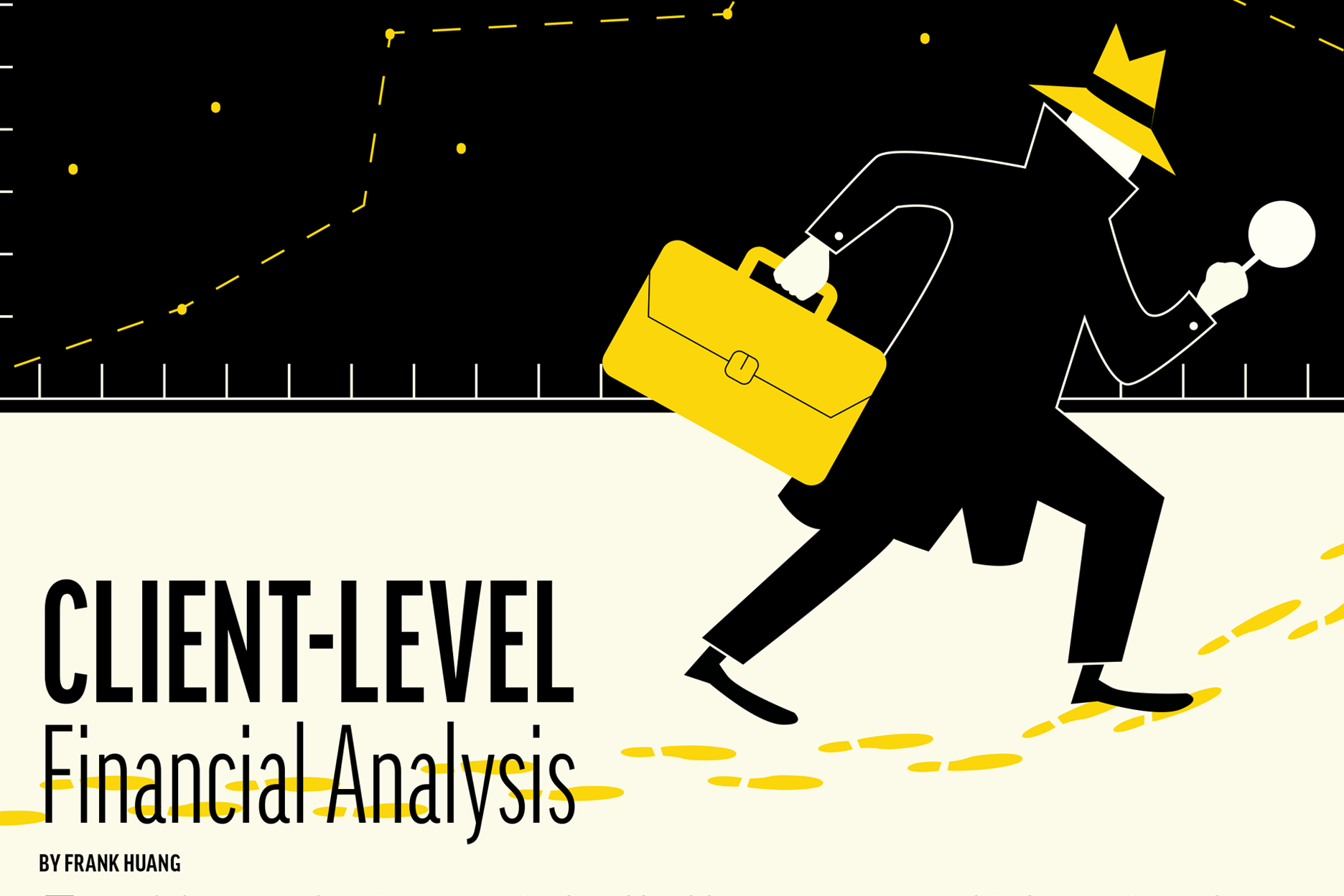
CLIENT-LEVEL FINANCIAL ANALYSIS
If you asked someone in the PEO space what he or she thought of actuarial science a positive response might be reserve analyses or accruals. A negative response might be collateral calls or rate increases. Naturally, the varied reactions stem from whether there is positive or negative news coming from the work of the actuary. Yet, one of the most helpful projects an actuary can perform for a PEO, eliciting either positive and negative reactions, is a client-level financial analysis.
BY FRANK HUANG
June/July 2023
PROFITABILITY ABCs: IT IS AS EASY AS 1-2-3
The article provides some simple guidance for streamlining operations (thus reducing selling, general, and administrative (SGA) costs) and increasing gross profit contribution from their existing client base. For the purpose of this article, we are only exploring pricing strategies that affect client profitability and operating efficiency items that impact select SG&A cost categories. Business development and organic growth are excluded from this discussion.
BY Dan McHenry
June/July 2023ADVERTISEMENT