
NAPEO
AI AND PROFITABILITY: HOW PEOS CAN USE AI TO IMPROVE PROFIT MARGINS
November 2026

The promise of AI is clear: grow the business without needing to add headcount. This brings down cost to serve and improves profitability. For PEOs, that promise matters more than it does in most industries, because of the economics of a PEO. Revenue scales with worksite employees (WSEs), while costs scale with the internal staff needed to serve them. Anything that lets you add WSEs without adding internal staff drops straight to the bottom line.
Here’s what PEO leaders often miss: You don’t need to eliminate headcount to improve profitability.
You need to prevent future hiring. It’s a subtle distinction, but it changes everything about how you should evaluate, select and deploy AI inside your organization.
Rather than making AI implementation a threatening cost-cutting exercise, it can become a growth strategy your team can actually get behind.
THE IMPACT
Every hire you can defer saves the business $70,000 or more per year once you account for salary, benefits, employer taxes, software seats and management overhead. Defer three or four hires between payroll, HR, and benefits and you’ve saved yourself a quarter million dollars annually in salary and benefits without even cutting your current staff.
The gains compound in conjunction with growth. Imagine a PEO with 10,000 WSEs and 100 internal employees. At a typical net service revenue of around $1,500 per WSE per year, growing WSE numbers by 1,000 while keeping the same number of internal employees generates $1.5 million in additional annual revenue at a fixed cost level. Since there wasn’t any internal hiring, the majority of those incremental dollars come straight to gross profit. After adjusting for variable costs, such “growth without hiring” can add several points to operating margin – something that takes years of pricing and procurement improvements to match.
That is the prize. The question is how to earn it.
THE PROBLEM
Most PEOs struggle to figure out where to start. Many that start make a common mistake in how they approach automation: they assume efficiency equals profitability. It doesn’t.
Take two automation projects. Project A saves 20 hours per week across the company and saves zero headcount. Project B saves 10 hours per week and saves two headcount.
Why did project B save twice as much headcount? It’s all in where the time savings land.
Imagine two payroll specialists working overtime in processing weeks at 110% capacity, so that another customer win means another requisition. In this case, an automation that gets them from 110% to 95% capacity just deferred two hires. That is real money.
But imagine taking a generalist with capacity of 90% and automating them down to 40%. You save a ton of hours and no money. You still have a person in a seat earning salary and the free time diffuses into the rest of the organization, without reducing the cost base.
Saved time is valuable only if it impacts the hiring decision. Efficiency without headcount savings is a morale gain, not a margin gain.
THE STRATEGY
Once you adopt this paradigm, the strategy follows: pay careful attention to where time savings translate into profitability. Time savings diffused evenly across many departments don’t usually impact headcount, because none of the teams cross the threshold where the hiring is deferred.
It makes sense to separate automations into two types.
Horizontal automations save a small amount of time for many people within the organization. They can include meeting summaries, email drafts and generic research assistance. These are great to have, they improve the quality of work life, but the savings are diffuse.
Vertical automations save a large amount of time for one person or one team. This could be an automation of a benefits plan setup for benefits specialists or payroll audit for payroll specialists. The savings are concentrated right where hiring pressure is building.
Vertical automations lead to higher time savings faster and, more importantly, the savings become concentrated in places where they can affect a hiring decision. Horizontal savings may eventually sum up, but they will take a much longer time, if at all, to affect your P&L.
To achieve profitability, go vertical first.
THE TACTICS
Here is a five-step playbook for implementing this approach.
1. Set a baseline. What cannot be managed cannot be measured. Establish your co-employee ratios (WSEs per internal employee) separately by department. The general ratio tells you how efficient your business is; the department ratios tell you where pressure is building. A payroll department with a ratio of 2,500 WSEs per specialist and an HR department with a ratio of 900 WSEs per generalist present completely different automation targets.
2. Identify departments at risk of hiring. Your next hire is the biggest automation target. Find the areas where capacity is strained now and where growth will strain it further. For example, if your sales pipeline shows that you’ll add 800 WSEs over the next two quarters, and your payroll department is already at capacity, payroll is where you’re going to hire and where automation should be implemented first.
3. Map manual processes and their time consumption. In departments that are likely to hire, identify the manual processes and estimate how much time they require. Concentrate on well-defined processes: repeatable, rules-based, and documented, or at least documentable. Processes that require significant judgment are not the best candidates yet; well-defined ones can be handled effectively by today’s AI solutions.
Processes that are likely to be automated at most PEOs are:
- HR: employee handbooks, leave of absence administration, separation notices, new hire processing, terminations
- Payroll: time entry, payroll auditing, payroll summary reports
- Benefits: benefits guides, benefits plan setup
- Implementation: client onboarding, PTO plan setup, employee census imports
If a process has a checklist, template or SOP behind it, it’s a perfect candidate for automation.
4. Implement the automation. With the targets identified, apply AI and automation to make the process run more smoothly. Here you face a classic dilemma: build or buy. You can implement automation in-house, which allows you to retain full control but requires engineering resources, maintenance and patience to iterate. Alternatively, you can team up with an automation provider with specific PEO expertise. That allows you to deliver results faster and benefit from patterns learned from many other PEOs, but it requires extra care with regard to data security, integration with HRIS and vendor viability.
There is no universal answer here, but the key question to ask is: which path reaches the point of deferring a hire faster? For most PEOs without an engineering team, ready-to-market solutions will get there first.
5. Monitor your progress against the baseline. Finally, close the loop. Track your co-employee ratios on a quarterly basis (overall and by department), and compare them to your initial baseline. A decent target is to achieve a 10% improvement in your WSE-to-internal-employee ratio every year. If your ratios aren’t improving, your automations are producing horizontal comfort instead of vertical savings, and it’s time to shift gears.
THE BOTTOM LINE
AI will not improve your profit margins by making everyone a little faster. It will improve your margins when it concentrates time savings in the exact places where you would otherwise have to hire. Set your baseline, find the next hire before it happens, automate the well-defined work underneath it and hold yourself accountable to the ratio. Do that consistently, and you can grow WSEs quarter after quarter while your cost base stands still, which is exactly where profitability lives.
-
SHARE
- Copy to clipboard
RELATED ARTICLES
2023 DIGITAL TRENDS
Lorem ipsum is simply dummy text of the printing and typesetting industry. Lorem Ipsum has been the industry’s standard dummy text ever since the 1500s, when an unknown printer took a galley of type and scrambled it to make a type specimen book. It has survived not only five centuries, but also the leap into …
BY James Joyce
June/July 2023
AI IN CYBERSECURITY: THE GOOD, THE BAD AND BEING ON THE PRECIPICE OF A NEW ERA IN TECHNOLOGY
As you might expect with cybersecurity, battlelines are being drawn between the people creating AI solutions to help protect companies and the people making AI software that is designed to find vulnerabilities in areas designed to protect data; systems; financial and personal information; intellectual property (IP); and Industrial Internet of Things (IIoT) and other IoT devices.
BY Dwayne Smith
September 2023
ASK THE EXPERT: A Q&A WITH PAUL NASH OF BEAZLEY
Paul Nash is an employment practices liability (EPL) underwriter with Beazley. He is the EPL and Safeguard product leader for both the UK and US teams and was instrumental in developing the first SAM/SML policy issued by Beazley in 2006. He has more than 30 years of experience in the insurance. He recently spoke with Paul Hughes of Libertate Insurance about the state of the EPLI market, how he has seen the PEO industry evolve and more. PEO Insider captured their conversation.
BY PAUL HUGES
August 2023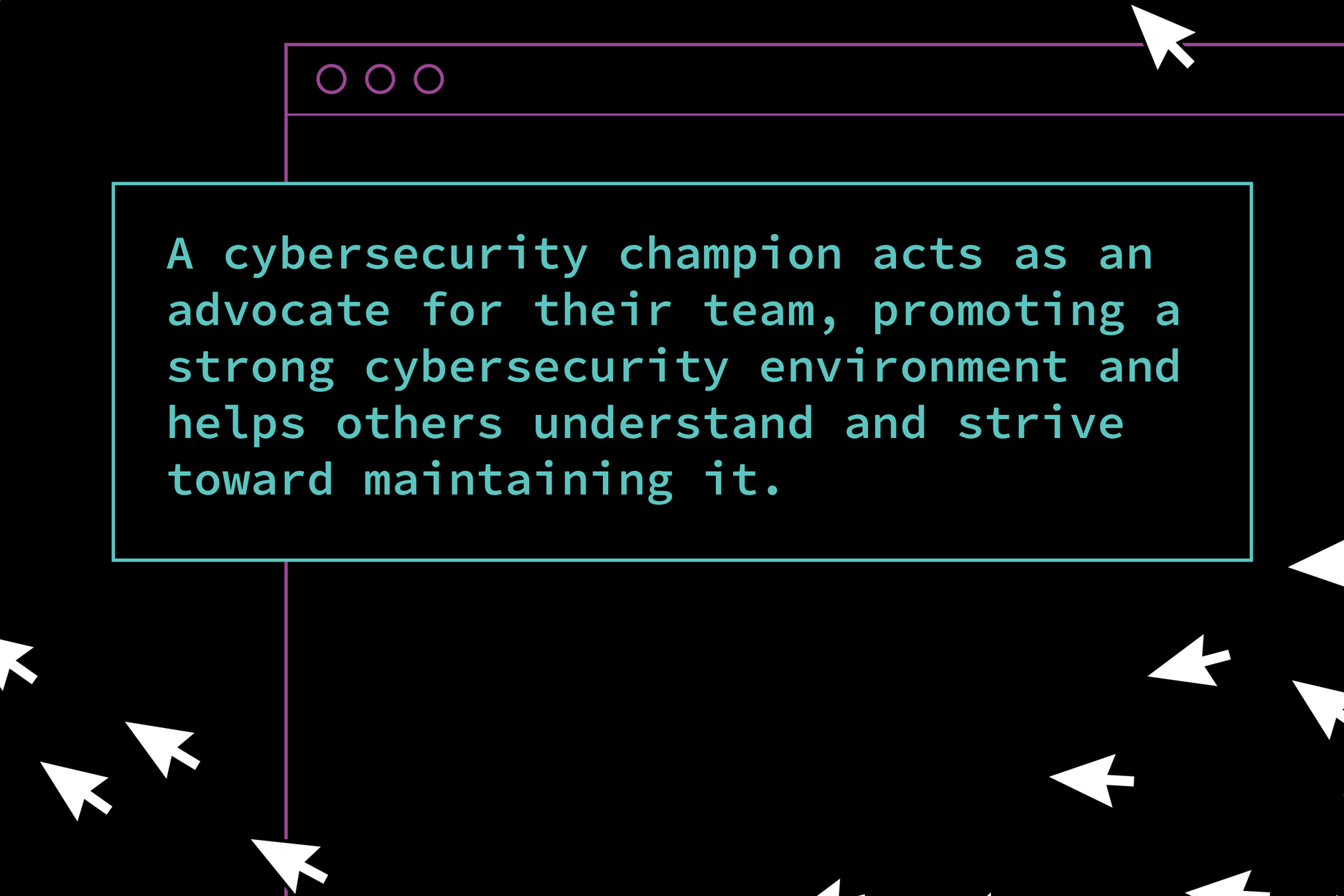
WHY CYBERSECURITY SHOULD NOT BE THE SOLE RESPONSIBILITY OF THE IT DEPARTMENT
Cybersecurity is an essential aspect of business operations, which is why it cannot be viewed as the sole responsibility of the IT department. Cybersecurity threats evolve daily and organizations can best prepare and protect themselves by taking a shared responsibility to protect the company’s assets and data.
BY Jenna Marceau
March 2023