
NAPEO
DATA PRIVACY AND THE PEO ROLE: MANAGING RISK IN A CHANGING COMPLIANCE LANDSCAPE
May 2026
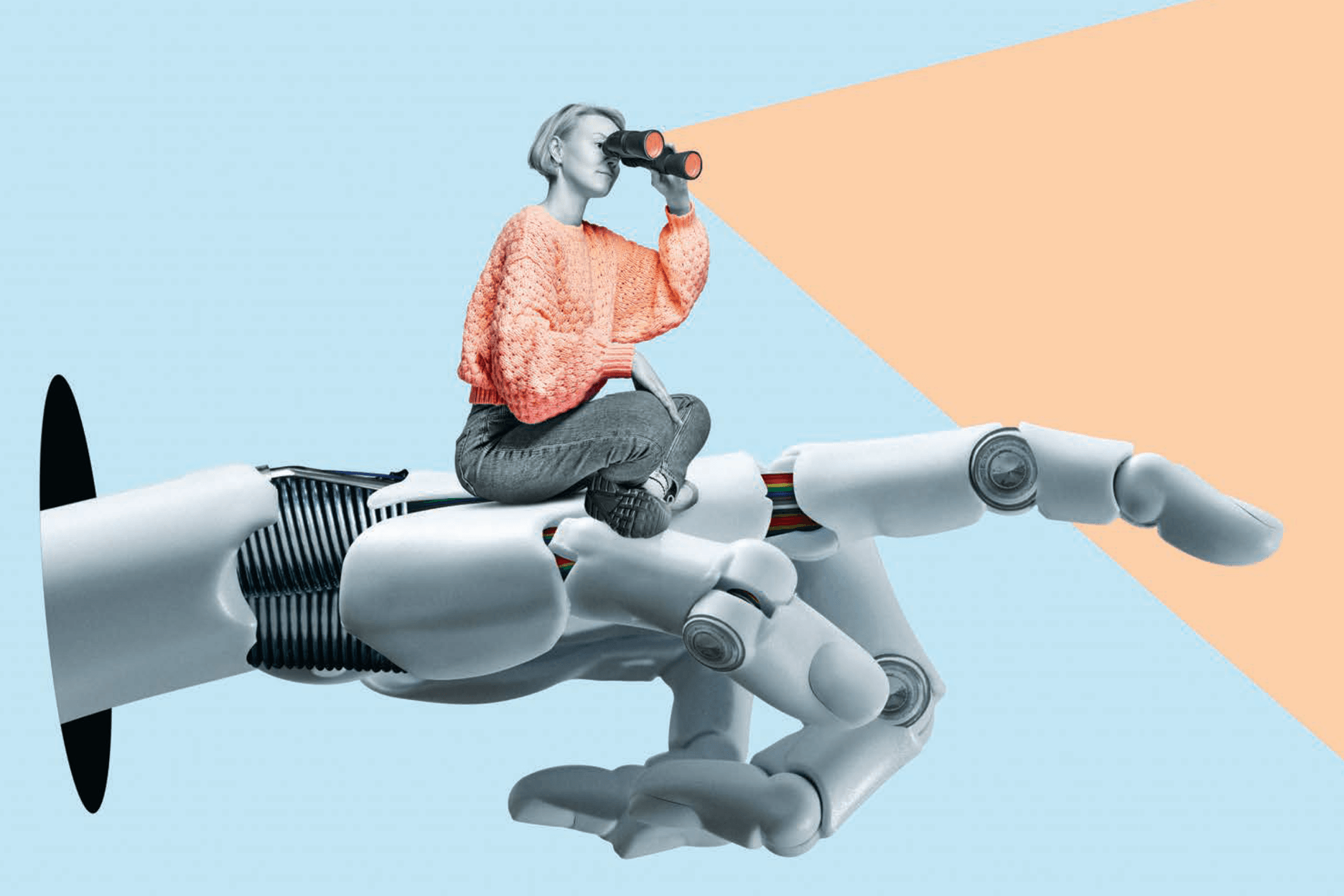
Data privacy has moved out of the back office and onto the leadership agenda, and for professional employer organizations (PEOs), it hits especially close to home. You’re not just managing data. You’re managing people’s data across dozens, sometimes hundreds, of client environments. That brings a different level of responsibility and real, shared legal risk.
Across the United States, state privacy laws are rapidly expanding, while federal regulators are increasing enforcement around data handling, discrimination, and employee rights. If it feels like the ground is shifting, that’s because it is. For the PEO industry, the challenge is complex but manageable with the right structure in place. In this article, we’ll take a closer look at what matters now and how leading PEOs are responding.
THE GROWING MAZE OF U.S. PRIVACY LAWS
There is no single federal law that governs how employers handle employee data. Instead, we’re working within a patchwork of state laws layered on top of existing federal requirements. California set the pace with the California Consumer Privacy Act (CCPA) and its expansion under the California Privacy Rights Act (CPRA). Since then, Colorado, Virginia, Connecticut, and Utah have followed with similar frameworks, and more states are moving in that direction. The scope of these types of laws is what’s changed. These laws increasingly apply to employee data, not just consumer data. Payroll records, benefits information, performance documentation, and internal communications can all fall within scope.
The stakes are real. The global average cost of a data breach reached $4.44 million, but the United States continues to see significantly higher impact, with average breach costs rising to $10.22 million—an all-time high driven in part by regulatory fines and higher detection and escalation costs (IBM, 2025). For PEOs managing data across multiple clients and systems, that exposure scales quickly.
At the same time, expectations are rising. Recent SHRM research shows growing concern among HR professionals about employee data privacy, and that concern is shaping employer expectations and decision-making.
WHY PEOS SIT IN A UNIQUE (AND COMPLICATED) POSITION
The co-employment model is part of what makes PEOs valuable. It also adds complexity to data privacy. Both the client and the PEO handle employee data. Both carry responsibility. But regulators do not always draw clear lines when something goes wrong.
In practice, PEOs operate across multiple roles, including data handler, compliance partner, and advisor. That advisory role is becoming more important as many small and mid-sized employers lack in-house privacy expertise.
There is also a workforce impact. Employees notice how their information is handled. Research from Harvard Business Review shows that when employees trust their employer to manage data responsibly, they’re more engaged and more likely to stay. Trust shows up in retention, morale, and performance.
AI: HELPFUL TOOL OR HIDDEN RISK?
Now, let’s talk about the elephant in the room: AI. It’s everywhere right now. HR teams are using it to screen candidates, draft communications, and even support performance reviews. Many of these use cases offer clear efficiency gains. Faster workflows. Less manual work. Cleaner data analysis.
But here’s where things get a little uneasy. AI systems rely on large volumes of data, often including sensitive employee information such as compensation, health-related data, and disciplinary history. In many organizations, adoption is moving faster than oversight. For PEOs, the goal is to ensure AI supports decision-making without increasing legal exposure.
WHERE PRIVACY AND AI TEND TO COLLIDE
When AI is layered into an already complex privacy landscape, several risks emerge.
Data inputs: Open AI tools may retain or reuse submitted information. Entering sensitive employee data into these systems can create unintended exposure.
Vendor transparency: Not all providers clearly explain how data is stored, processed, or shared. Limited visibility increases compliance risk.
Explainability: Some AI systems function as “black boxes.” If decisions cannot be explained, it becomes difficult to defend hiring, promotion, or disciplinary outcomes.
Employee monitoring: AI tools can track productivity, behavior, and location. States are beginning to tighten rules in this area. New York requires notice of electronic monitoring, and Illinois continues to enforce biometric privacy protections, with other states considering similar measures.
At the same time, digital HR adoption continues to grow, expanding both capability and exposure.
WHAT EFFECTIVE PEOS ARE DOING RIGHT NOW
Leading PEOs aren’t stepping back from technology. They are building structure around it by incorporating AI into data governance frameworks, defining what tools are approved, what data can be used, and who has access. They’re limiting the use of open systems for sensitive data and setting clear internal guidelines. They are strengthening vendor oversight. Contracts go beyond service terms to address data use, security, and accountability.
At a minimum, PEOs should expect:
- Documentation on model design and data inputs
- Evidence of validation and bias testing
- Transparency on data storage, retention, and use
- Audit rights or third-party review options
- Defined processes for addressing bias or errors
They are also ensuring that AI-driven decisions can be reproduced and explained if challenged. Without that, defending employment decisions becomes more difficult.
Training is another focus area. Most data issues do not stem from bad intent, but from lack of awareness. Teams need clear guidance on handling sensitive data, responding to employee requests, and escalating potential issues. And importantly, strong PEOs are reviewing outputs. AI-generated insights are not taken at face value. They are evaluated, questioned, and validated.
THE ROAD AHEAD
It is easy to think of privacy as a compliance requirement. That view is becoming outdated. Privacy now connects directly to trust, and trust influences client relationships, employee engagement, and organizational stability.
Clients expect their data to be handled responsibly. Employees expect transparency. Regulators expect accountability. For PEOs, this creates an opportunity to strengthen their role as a compliance partner. Organizations that build strong privacy and AI governance practices will be better positioned to support clients and adapt as regulations evolve.
This is not about slowing innovation. It is about guiding it. Start with visibility. Understand your data. Strengthen your policies. Align HR, legal, and IT early. Because the tools will continue to evolve. The laws will too. The question is whether your approach evolves with them.
-
SHARE
- Copy to clipboard
RELATED ARTICLES
MEET CONGRESSWOMAN ERIN HOUCHIN
Voters in Indiana’s 9th Congressional district elected Congresswoman Erin Houchin to serve in the United States House of Representatives in November 2022. In doing so, Rep. Houchin became the first woman elected to Congress from her district. She also holds the distinction of being the only person elected to Congress who has worked for a PEO.Rep. Houchin spoke to PEO Insider about her decision to seek public office, her experience working for a PEO, and the policies she champions.
BY Chris Chaney
May 2023
NAPEO ADVOCACY DAY IS A HOME RUN
There's an energy around the PEO industry this year that's palpable. Nowhere is that more true than in Washington DC, where we are starting to make our mark as a strong contributor to the vitality and success of the backbone of the economy: small and mid-size businesses. We've got a great story to tell. Help us tell it.
BY THOM STOHLER
August 2023
THINK IT THROUGH: HOW RETURN-TO-OFFICE MANDATES MAY IMPACT EMPLOYEE ENGAGEMENT
As a result of the workforce evolution in recent years, remote, hybrid and onsite work has been redefined, and is a top-of-mind subject in daily conversations. Many companies and teams like ours at LandrumHR have an employee base geographically widespread throughout the U.S. In our case, this pre-dates the pandemic, but like these other companies we, too, are still evaluating the pros and cons to re-engaging teams physically onsite where and when possible, without causing disruption to workflow and requiring facilities (re)construct.
BY Gehan "G" Haridy-Ardanowski
February 2023
STAY INFORMED: RECENT LEGAL DEVELOPMENTS MAY IMPACT EMPLOYERS’ USE OF ARBITRATION IN EMPLOYMENT CLAIMS
Use of arbitration and class-action waiver agreements allows for the private resolution of employment claims on an individual basis. While arbitration is not a low-cost alternative, it can be a very strong hedge against runaway jury awards and swollen class-action damages.
BY STEPHEN CALVERT, ESQ.
May 2023