AI WITHIN UI

From my vantage point, the infusion of AI into the unemployment sector holds the key to unlocking a multitude of advantages that could revolutionize the efficiency, accuracy, and cost-effectiveness of unemployment insurance operations.

NAPEO
From my vantage point, the infusion of AI into the unemployment sector holds the key to unlocking a multitude of advantages that could revolutionize the efficiency, accuracy, and cost-effectiveness of unemployment insurance operations.
Efficiencies are and always will be an investment, and updating your daily processes may take time; however, the payoff is guaranteed. By innovating with technology, you will achieve your goals of improving efficiencies and delighting your customers.
PEOs should seek to cultivate a culture of risk management surrounding AI use – both in your organizations and at your clients’ places of business – in order to be best positioned in this new area. These are the 10 most critical steps to minimize.
Today, any business that doesn’t capitalize on data advancements risks being swept away with the tide. PEOs in particular should think of data as a direct pipeline to the resources you and your clients need to navigate the complex world of HR and compliance, and make better business decisions in the process.
AI holds the potential to revolutionize the insurance and benefits industry, contributing to risk reduction, enhanced customer service, and augmented efficiency. The potential of automation and generative AI is boundless, and adoption continues to surge.
Automation tools can provide some much-needed relief during open enrollment, empowering small business leaders to get it all done. However, many small business leaders seem unsure about the return on the investment of technology in this space.
We’ve now reached a critical juncture where companies need to make a few important decisions about how to use AI. Many topics will include both HR and HCM, meaning countless companies will be looking to their PEO partners to provide guidance in navigating the increasingly complicated AI waters.
The pressing question for organizational leaders centers around how to leverage data strategically and productively toward meaningful results. Here is a simple framework to drive value and impact through the use of quality data.
PEOs should be aware of what AI tools can do to assist their clients but should also recognize that this is an emerging technology still subject to flaws.
When I was young, I watched movies with robots and drones; we called this science fiction because such things would, of course, never come true. This was only imagined to be future scientific or technology advances as is artificial intelligence or AI. So here we are – and yes, robots and drones have come to offer technological advances that can enhance the way we interact with each other and with the world. And they are here to stay!
So how can AI impact mergers and acquisitions (M&A)? What M&A tasks can a robot control or computer complete in the M&A world that are usually done by humans? Let’s look at just a few examples.
LEVERAGING AI IN M&A TASKS
Target Screening.To determine the best ROI, shareholders of the buying company must identify acquisition targets and understand how the deal will impact their strategy and financial performance. By harnessing the power of AI, buyers may be able to more efficiently and accurately identify potential targets, thereby increasing the likelihood of successful acquisitions.
Due Diligence. AI can streamline the due diligence process by document review and analysis. Cloud based data rooms have already revolutionized M&A due diligence by replacing physical data rooms and I think AI will enhance the process even more. And to think that back in the day we had real paper deal books that we mailed!
Analysis of Information. AI may be able to analyze information such as a company’s brand, management, trajectory, resources, productivity, and financial information to determine the profitability of the combined entities.
Reduction of Risk. AI may be able to reduce risk in due diligence by analysis of huge volumes of data, therefore forecasting trends. This could help decision making for more successful MA strategies. Companies can leverage AI as algorithms accurately aid better predictions which makes a shift in how deals are originated and evaluated.
Valuation. Determining the value of a PEO is made of many distinct pieces of the valuation puzzle. I just do not see a tremendous impact on the human ability to understand valuations across the PEO industry unless they have done multiple deals and understand the comparisons in detail.
Post-acquisition. AI can follow an acquisition, facilitating the integration by automating various tasks including data migration, employee onboarding, and process standardization.
In summary, AI is reshaping the way buyers undertake due diligence, make decisions, and integrate post-merger. Organizations can obtain profound understandings of target companies, minimize the duration and expense of M&A and make better informed decisions driven by data.
But at the end of the day there is one thing you cannot take out of successful M&A transactions and that is the people. It takes a combination of business and emotional intelligence to be a great M&A advisor, and it takes an incredible “read” on the people involved on both the buy and sell side to know if a deal will ultimately be successful. It is kindness, integrity and respect that truly guide the M&A process and those for me are simply real-time and human. So for now, while some of the deal tasks can be completed by AI, great deal making is about the ability to understand, guide and value the people and will not gain immediately from AI in my opinion. But then again, I was not a believer in science fiction!
I have often found myself standing for minutes in my nearby Publix trying to figure out which item to buy. Did I want the $2 name brand product, or the $1.50 Publix generic version? Did I want the less tasty Gala apples at $1/lb or the tastier Honeycrisp apples at $2/lb? I would stand there paralyzed by the decision.
Thankfully, at some point, stomach pain kicks in and forces you to make a decision. But in real life, there are many in PEO leadership who are staring blankly, maybe even petrified and anxious, in the aisle of predictive models trying to figure out how to decide between different companies. So, let me do my best to present you with points you should consider to move from trepidation to triumph.
First, two caveats. The first one is that this is not comprehensive. Writing a thorough treatise on this would take too long and I’ve already used enough of my word limit. The second caveat is that this article is focused on analytics firms providing underwriting, pricing, loss control, or claims-level solutions that are commonly marketed as AI.
So, how does one select an AI vendor in claims, loss control, underwriting, or pricing?
CONSIDER THE BUILD VS BUY DECISION
There are a lot of considerations going into this decision, but it’s worth checking this point off before you start heading to the analytics store. Building something in-house or even with outside support could be a better option if you’re looking for a more customized solution, have in-house technical expertise and resources, and/or need a quicker turnaround. The customization aspect is important because PEOs are not insurance companies, and so you’ll want to find a vendor that can not only spell P-E-O, but also know how a model implemented with you would differ from an insurance carrier.
It is worth noting that I have definitely seen companies start off with great intentions and then end up with more money spent and less of a product than if they had just outsourced the work from the get-go. Going with an external vendor can mean avoiding diverting too much attention and resource from other parts of the business, having immediate access to specialized expertise, proven technology, and on-going support.
HAVE THE RIGHT PEOPLE LEADING THE RFP
A request for proposal (RFP) process or something akin to it is absolutely crucial to ensuring a methodical approach to evaluating the potential vendors. Internal stakeholders with previous experience are the most ideal, and it’s important to also incorporate other stakeholders if not into the actual process then at least to get feedback at the outset.
Experience is key but a characteristic not to be overlooked is independence. Whomever you have leading the process, make sure that that person or group of people have the best interests of the company at heart, with no selfish motivations apparent that might impair their judgment.
LOOK UNDER THE HOOD
It’s important that you, or the people you trust, understand the model design and how it compares against competition. I’ve seen models promoted as being robust and cutting edge, but once you get through an NDA and delve into the model details the model is shockingly dated and not well suited for anyone’s needs.
It’s also good to give it a test drive. How does the model perform on your own data? Having real-life examples can help you get comfortable with important details like the potential range of ROI and what a model “error” or incorrect prediction might mean financially and operationally.
DIFFERENTIATE BETWEEN SALESPEOPLE AND POST-SALE SUPPORT
As you go through the RFP process, some firms will connect you with smooth-talking salespeople and flashy decks persuading you that your hard-earned budget will generate an immense return. However, after you sign the contract, you quickly realize and regret that the immediate attention you received from that salesperson is now replaced with inattentive and rigid interactions with the people actually doing the work. As you go through the RFP process, make sure you differentiate those two groups, and talk to the actual people behind the scenes.
A subpoint to this is understanding how important of a client you are for the company. Are you a smaller or larger client for them? Will they be willing to work with you on changes in the model because you’re a valued client, or will they brush you off because you’re booked as a win on last month’s sales quota?
PUSH FOR PERFORMANCE-BASED CONTRACT TERMS
It’s great when companies say they want to share in your success and ensure there will be little downside to spending your budget with them, but what if they were able to codify those assertions in a contract? Having a contract designed such that you pay little when there’s little to no results, and you pay more when you’re swimming in ROI is a true partnership. Of course, the devil is in the details. You have to not only define “success” but be able to objectively quantify and monitor it over time.
While there are many other considerations at play and each situation is different depending on the PEO’s history, sophistication, needs, goals, etc., the above points hopefully will help reduce some anxiety when looking at the different options in the predictive modeling aisle.
Lorem ipsum is simply dummy text of the printing and typesetting industry. Lorem Ipsum has been the industry’s standard dummy text ever since the 1500s, when an unknown printer took a galley of type and scrambled it to make a type specimen book. It has survived not only five centuries, but also the leap into electronic typesetting, remaining essentially unchanged.
As you might expect with cybersecurity, battlelines are being drawn between the people creating AI solutions to help protect companies and the people making AI software that is designed to find vulnerabilities in areas designed to protect data; systems; financial and personal information; intellectual property (IP); and Industrial Internet of Things (IIoT) and other IoT devices.
As you might expect with cybersecurity, battlelines are being drawn between the people creating AI solutions to help protect companies and the people making AI software that is designed to find vulnerabilities in areas designed to protect data; systems; financial and personal information; intellectual property (IP); and Industrial Internet of Things (IIoT) and other IoT devices.
Experts have written articles for decades urging companies to update their business with cutting-edge technologies. By now, you may have been lulled to sleep by such headlines, content with your current processes and an “if it’s not broke” mindset. You may even be convinced that recent technological advancements like artificial intelligence (AI) are just a fad or something to ignore. However, given the exponential rate at which new cutting-edge technology is transforming every industry – including the PEO industry – you and your business no longer have the luxury of complacency.
You might think your PEO and most of your customers don’t need a workplace policy covering artificial intelligence (AI). After all, you and your customers might not have an internal AI product for workers to use, and not all your customers are in the tech space. But employees across all industries are intensely AI-curious and are wondering whether ChatGPT, Google’s Bard, and other similar platforms can help them at work. With this inevitable use comes some serious legal risks for your PEO and your customers. An AI policy can reduce some of the risk. What are the top 10 reasons why you and your customers need an AI policy?
Paul Nash is an employment practices liability (EPL) underwriter with Beazley. He is the EPL and Safeguard product leader for both the UK and US teams and was instrumental in developing the first SAM/SML policy issued by Beazley in 2006. He has more than 30 years of experience in the insurance. He recently spoke with Paul Hughes of Libertate Insurance about the state of the EPLI market, how he has seen the PEO industry evolve and more. PEO Insider captured their conversation.
When it comes to signing up new employer groups in your PEO’s health insurance pool, collecting questionnaires has always been a sticking point. Today’s clients are like any other consumers; they demand seamless and nearly instant purchase experiences.
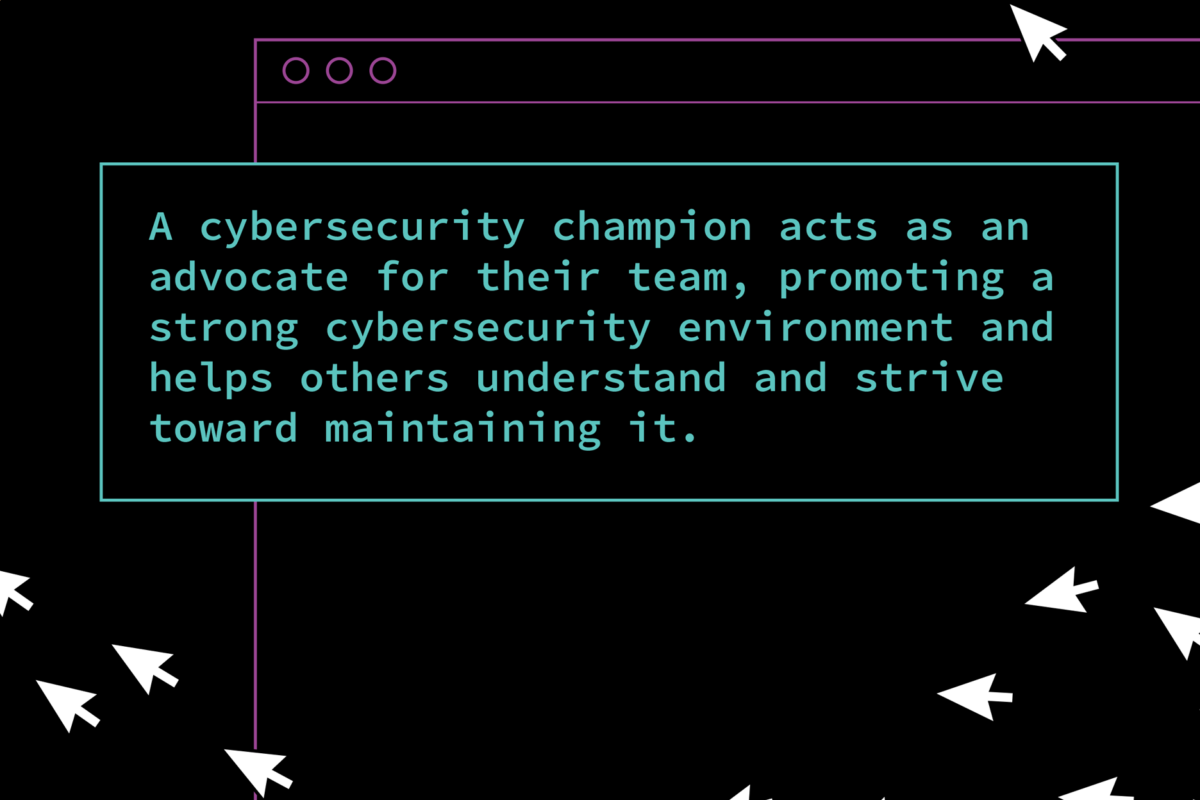
Cybersecurity is an essential aspect of business operations, which is why it cannot be viewed as the sole responsibility of the IT department. Cybersecurity threats evolve daily and organizations can best prepare and protect themselves by taking a shared responsibility to protect the company’s assets and data.
One of the questions I’m frequently asked by PEOs is simple: Is the cloud safe? Actually, this is a trickier question than it seems. The answer is yes, of course, but like any internet-based endeavor, there are certainly many caveats. Cloud security requires you to think about security differently than on-premise security or data center security.
Every business faces different challenges whether from competitors, market changes, supply chain disruptions, or myriad external or internal forces. Yet every business, regardless of size or industry, faces a common threat: the security of critical data. Whether it’s the leak of proprietary business information or customer data, or a breach, or a malicious software attack, it can be devastating. Security incidents result in disruption, fines and a loss in customer confidence that can take years to recover.
We all have locks and alarms on our homes, businesses, and vehicles. None of us would think about leaving our property unguarded. Why would you take the chance with your digital property? So, what can PEOs do internally to help secure the vulnerable areas of their business? As IT Manager at ESI, I have the task of guarding the gates of ESI through various techniques. Hopefully, by sharing some of these techniques, we will add some nuggets to your cybersecurity protocol.
Disasters are inevitable, and their timing is unpredictable. Preparing your company and employees before disaster strikes can make the difference between a catastrophe or an inconvenience. While no one wants to experience a business disruption, especially any technology-related disruption, there are many reasons that you could end up in that position.
The exposure of being an employer is dynamic and untenable for a small employer, which is why PEOs are so crucial to businesses. While core PEO responsibilities such as payroll, procurement of workers’ compensation, and human resources are foundational value propositions to assist employers, in addition to these areas what makes one PEO more attractive than another in the selection process? What is the biggest problem to solve for your client company? Maybe it’s safety. Usually, the area where they lack the most understanding and support is in cyber defense. Every client of yours is a sitting duck for a hacker and you can help.