HR NEEDS MORE DAD JOKES: A WORK DAD’S CASE FOR HUMOR, CONNECTION AND GRACE IN THE PEO WORLD

A simple, safe moment of humor signals emotional steadiness. It communicates that the conversation is a process, not a confrontation.

NAPEO
A simple, safe moment of humor signals emotional steadiness. It communicates that the conversation is a process, not a confrontation.
For HR professionals working within a PEO, building strong partnerships with client-side HR professionals is essential. When the relationship works well, the client benefits from expanded expertise and resources.
Developing and following a strategic, annual roadmap for year-round benefits communications can help to transform the worksite experience in 2026 and well into the future.
Internal communication carries more cultural weight than external branding. Employees experience the organization through the tone, clarity, and consistency of what they hear and experience.
The most effective distributed teams normalize written updates, clear decision logs, and transparent progress tracking so that no one is disadvantaged by geography or schedule.
Policies only work when organizations normalize boundaries and encourage employees to unplug without penalty. When leaders model respect for personal time, it signals that rest is part of professional responsibility, not resistance to it.
Conflict conversations. Critical conversations. Difficult conversations. These are all phrases people leaders have heard over the years to describe conversations that deliver anything but positive feedback and good news. These phrases all have one word in common: conversation. In the office, my team is used to hearing me say, “It’s just a conversation.” However, the older I get, the more I understand that these types of conversations are a skill that needs to be developed. At times, it can feel like an art. The bottom line is this: if we truly care about our team, our peers, our clients, and our organizations as a whole, then we should care enough to have difficult conversations.
The case for getting more comfortable with critical conversations is widely known. When leaders and teams avoid or mishandle difficult conversations, the consequences have a ripple effect throughout the organization. Unresolved conflicts and misunderstandings can escalate, creating tension and eroding collaboration. Performance issues often go unaddressed, which lowers productivity and impacts morale. In the absence of difficult conversations, an organization cannot achieve its full potential.
Like many things worth doing, improving an organization’s ability to effectively handle difficult conversations is easier said than done. If your organization is not great at or uncomfortable with difficult conversations, it may take a cultural shift, and as we know, cultural shifts take time. Ultimately, in order to have a culture of honest and transparent communication, you must have a foundation of trust. Building that foundation takes time, but it is possible by focusing on five key elements.
As with any change in an organization, executive leadership must champion the cultural shift and lead by example. In the case of creating a culture of comfort with difficult conversations, leadership must model transparent, direct, and honest communication. They should openly take accountability for mistakes, talk candidly about their own improvement journeys, and celebrate not just successes but the lessons learned from failures. This creates an environment where employees understand that openly discussing challenges or areas of improvement is not a sign their employment is at risk, but instead an opportunity to grow personally and professionally.
The term psychological safety is more than a buzzword. It is the foundation for building a culture of open and honest dialogue, especially when conversations feel difficult. This requires a standard practice of encouraging people to speak up without fear. It must be clear that both positive and critical feedback are essential to organizational growth and strength. Saying this verbally is a start, but actions matter more. Providing constructive feedback, especially when uncomfortable, must not only be encouraged but rewarded. Something as simple as private recognition to acknowledge someone for speaking up when it was hard can leave a lasting impression and provide the positive reinforcement needed to make the behavior a habit and then ultimately, a cultural norm.
In my experience, difficult conversations are much easier when you have a strong relationship with the other party. When there is a strong sense of care, trust, and connection, potentially difficult conversations feel less intimidating. Additionally, when you know someone well, you understand their communication style, and vice versa, which allows you to plan ahead and deliver your message intentionally, ensuring it is interpreted as intended. There are many ways to build strong relationships in the workplace, from team-building activities to regular, structured one-on-one meetings. Whatever method you choose, focus on creating space for open, honest dialogue and getting to know your team better.
There are many systems and software solutions available to help organizations create structured performance management and feedback processes. The most important factor when determining what system to use is cultural alignment. If the work environment is highly structured and disciplined, choose a system that is consistent and process driven. Be sure to align feedback channels to measurable goals and KPIs. If you have a more flexible and relaxed work environment, focus on a system or software that focuses on adaptability and continuous feedback through less formal channels rather than rigid processes. The key is to ensure the system reflects the organization’s values and working style. Otherwise, it will feel forced and fail to gain traction. A well-aligned system not only standardizes performance management but also reinforces cultural norms, making feedback a natural and expected part of everyday work. When feedback is natural and expected, it is easier to give and receive it, especially when delivering difficult messages.
As stated earlier, the ability to effectively execute difficult conversations is a skill that needs to be developed and maintained. Training and development opportunities should be offered regularly based on the needs of your organization. If you are just starting this journey, you might need to offer more frequent training to start. Once critical conversations become part of the organizational culture, you may only need periodic refreshers. Additionally, it is important to consider individual needs. Some people are naturally more or less comfortable with direct feedback, while others may have already worked to develop these skills. Make sure team members who need more support have access to tailored opportunities that consider their natural behaviors and traits. Development opportunities must focus on giving people the tools they need to have difficult conversations authentically, which will vary from person to person.
Building a culture where honest dialogue is the norm doesn’t happen overnight. It requires intentional effort, trust, and consistency. When organizations commit to these practices, they not only resolve issues faster but also strengthen relationships, boost engagement, and achieve their full potential. Avoiding tough conversations might feel easier in the moment, but it creates bigger problems later. And those problems are always harder to resolve than the conversations that were avoided.
By offering diverse options—from mental-health resources and financial-wellness tools to lifestyle benefits and industry-specific programs PEOs can differentiate themselves without increasing employer costs while improving client/employee satisfaction and retention.
PEOs can help employers select and implement the right engagement tools, ensure consistent and secure data collection, and provide expert guidance on interpreting results.
PEOs can improve health care affordability and access for women by working with health benefits carriers to address coverage for health issues beyond fertility and childbirth.
If medical insurance is now a basic utility, wellness programs are what helps retain employees. This is where PEOs need to shift their focus to really drive retention.
While company culture occurs across various company environments, it is complex and yet remains an organic element that shapes regardless of intention, strategy, or cultural mindset
In today’s competitive labor market, retirement plans are no longer just a perk—they’re a strategic lever for business growth. For PEOs, the modern 401(k) offers measurable returns in productivity, retention, and client acquisition. As the PEO industry continues to expand and diversify, the ability to deliver scalable, high-impact retirement solutions is becoming a key differentiator.
Historically, retirement plans have been viewed as a compliance requirement or a line-item expense. That perception is changing. According to the Employee Benefit Research Institute (EBRI), consistent participation in 401(k) plans leads to significant asset growth, especially among younger employees. This financial security translates into higher engagement and lower turnover.
PEOs are uniquely positioned to help small and mid-sized businesses unlock this value. With more than 230,000 U.S. businesses now partnering with PEOs—representing 15% of employers with 10 to 499 employees—the opportunity to scale retirement benefits across industries is substantial.
Research from the Society for Human Resource Management (SHRM) shows that nearly 60% of employees cite retirement benefits as a key reason they stay with an employer. That sense of security fosters a more stable and productive workforce—something every PEO client values.
That productivity benefit is key. According to a 2023 Price Waterhouse Cooper financial wellness survey, employees distracted by money worries are less focused, less engaged, and more likely to miss work. A well-designed 401(k) plan can help address this.
Features like auto-enrollment, target-date funds, and managed accounts also help simplify employees’ decision-making and encourage participation. When paired with financial education, these tools empower employees to take control of their future.
No matter what industry you work in, turnover is costly. Recruiting, onboarding, and training new employees takes time and resources. Retirement plans can help reduce churn by creating long-term incentives for employees to stay.
Key plan design elements that support retention include:
According to a 2024 survey published on Napa-net.org, HR leaders cited employee benefits packages as the key retention factor for 33% of employees remaining at their current company. For PEOs, offering customizable retirement plan designs across adopting employers can be a powerful retention tool.
Benefits matter. Job seekers are evaluating employers not just on salary, but on total compensation. A competitive 401(k) offering signals stability, investment in employees, and long-term vision. According to Morgan Stanley at Work’s fifth-annual State of the Workplace Financial Benefits Study, roughly 7 in 10 (69%) HR executives believe access to retirement planning assistance from financial professionals is a top or high priority for employees when choosing where to work.
PEOs that deliver robust retirement solutions help their clients stand out. This is especially important in industries like healthcare, construction, and professional services, where skilled labor is in high demand.
Recent research from NAPA-Net shows that plan sponsors are prioritizing 401(k) design as part of their talent strategy. For PEOs, this means retirement plans are no longer optional—they’re essential to winning and retaining business.
Quantifying the return on a 401(k) investment requires looking beyond plan costs. Key metrics to monitor include:
While some of these metrics are qualitative, they provide valuable insight into how retirement plans impact business outcomes.
The timing for retirement plan investment is ideal. According to NAPEO’s Q2 2025 PEO Pulse Survey:
This momentum creates a favorable environment for expanding retirement offerings and demonstrating their value to clients.
The modern 401(k) is more than a benefit—it’s a business strategy. For PEOs, offering flexible, high-impact retirement plans helps drive productivity, reduce turnover, and attract top-tier clients. As the industry grows and evolves, retirement solutions will play a central role in shaping workforce outcomes.
PEO leaders should evaluate their current offerings and consider enhancements that align with client goals. By doing so, they position themselves not just as service providers, but as strategic partners in long-term success.
This article is designed to give general and timely information about the subjects covered. It is not intended as legal advice or assistance with individual problems. Readers should consult competent counsel of their own choosing about how the matters relate to their own affairs.
From generational clashes to differing views on diversity, remote work, and ethics, today’s PEOs and their HR Professionals are navigating a more divided employee environment than ever before.
As inflation, student debt, and healthcare costs continue to strain household budgets, employees increasingly expect their employers to act as partners in financial health.
When 98% of small businesses fear healthcare costs will overwhelm them, PEOs have a clear mandate. These businesses need partners who can transform an existential threat into a manageable operating expense.
Beth was a great experiment to show us the art of the possible. We’re actively looking at how AI can unlock opportunities for our employees and clients in the future.
What separates resilient companies from reactive ones isn’t the absence of issues; it’s a thoughtful, consistent, and purposeful response.
The post-pandemic surge in anxiety, depression, OCD, and eating disorders isn’t just more of the same—it’s faster-moving, earlier-onset, and hitting employer health plans harder. PEOs can blunt this by pairing proven therapies (like ERP/CBT) with modern, always-on digital supports, closing the “pre-claim” gap before crises spill into costly claims.
Before 2020, mental health needs were already widespread, yet many people waited years to get meaningful care. Today, about half of U.S. adults with a mental health condition receive treatment, and the average delay from first symptoms to first treatment is roughly 11 years—an eternity in a working life.
COVID-era isolation accelerated symptom onset and severity, especially in adolescents and young adults. CDC analyses show sharp increases in emergency-department visits for behavioral health, including eating disorders (EDs) among adolescent females doubling during the pandemic—a canary in the coal mine for broader anxiety, OCD, and mood concerns.
At work, that isolation has lingered. The U.S. Surgeon General now warns that loneliness is a public-health threat tied to worse health and productivity—making social connection a legitimate workplace priority, not a “soft” perk.
Bottom line: post-pandemic, conditions are emerging earlier and escalating more rapidly. The longer people wait, the more likely symptoms are to harden into disability and high-cost claims.
When we sit with employees and their families, two themes repeat:
Recognition lag. People often don’t realize early that what they’re experiencing is anxiety; OCD, depression, or an ED—and screening rarely happens until a crisis. (Again: 11-year average delay.)
Skills gap. Even when people understand the problem, they often lack practical, coached skills to respond effectively. They’re not broken; they’re under-skilled in coping—especially after pandemic-era isolation. Teaching those skills early (emotion regulation, cognitive reframing, ERP for OCD, self-compassion, sleep hygiene) can change trajectories.
ERP/CBT as first-line care. For OCD and related anxiety disorders, Exposure and Response Prevention (ERP) is a first-line, evidence-based therapy. Meta-analyses show ERP—particularly when blended with medications as appropriate—outperforms meds alone. For depression/anxiety, structured CBT has decades of evidence.
Digital CBT/step-care. High-quality digital CBT (with or without human support) consistently shows moderate effectiveness for mild-to-moderate symptoms, improving access between appointments and after EAP sessions end. This makes digital support ideal as a pre-claim buffer—meeting people at the “first-help” moment, building skills before crises escalate.
AI coaches—promise with guardrails. Early randomized trials of CBT-style chatbots (e.g., Woebot) reduce symptoms vs. information-only controls—useful for subclinical or mild-to-moderate cases. At the same time, quality varies; studies can be small, and crisis handling must be explicit. The takeaway: AI can extend reach and repetition, but must be embedded in a safe, supervised care pathway.
Traditional EAPs are valuable but chronically under-utilized (often ~5–10% utilization; median 5.5% reported by large employers in recent surveys). That means most employees never make it to their first session. PEOs can solve this by stacking benefits, so employees encounter help before they’re ready to call the EAP—and by making pathways clear and stigma-free.
Mental health investment pays off. The WHO estimates a 4:1 return for scaled treatment of depression and anxiety (better health and ability to work). New employer-side analyses also show material claims reductions from enhanced behavioral health benefits. Moreover, integrated behavioral-medical models are linked to lower overall medical spend—because untreated mental health worsens chronic conditions.
If you’re a CFO, think in buffers:
Even the humble EAP can move from a line-item few use to a front door many trust—if you fix pathways and promote it relentlessly.
Scope clearly. Position AI coaches as skills companions, not crisis care or diagnosis. Build automatic handoffs to human support when keywords/assessments indicate risk.
Clinical backbone. Favor tools grounded in CBT/ERP with transparent content provenance. Pilot with measures (PHQ-9/GAD-7) and publish outcomes.
Privacy by default. Require clear data handling, encryption, and no data resale; separate identifiable data from HR decision-making. (Trust drives utilization.)
Equity & access. Offer multimodal access (text, voice, low bandwidth) and language options; watch for bias in prompts and pathways.
Human connection first. Encourage peer groups, manager check-ins, and live therapy—AI should augment human care, not replace it.
“We see the fastest progress when people learn to do skills daily. Whether it’s ERP for OCD or compassionate cognitive skills for depression and ED recovery, reps matter. Digital tools can keep those reps going between sessions,” says Tara Deliberto, PhD, head of psychology with Yuna.
“There’s a mental-health gap that shows up as avoidable, escalating claims—and that’s a deep concern for carriers. If HR and EAP can push neutral, stigma-free pre-claim tools in front of people—screening, skills training, and ERP/CBT exercises—you change the curve. With clear guardrails, technology becomes a claims buffer: it catches issues earlier, shortens episodes, and reduces relapse,” adds Lucas Siegel, head of growth with Yuna.
“As a parent supporting a young adult through OCD, I learned that motivation rises and falls—what matters is having help in the moment. The difference between spiraling and stabilizing is often a small, timely nudge: a breathing drill, an exposure step, a reframing prompt, or a real person to text,” says Corey Hookstra, president of ESI.
Mental health needs are more visible, faster moving, and costlier when ignored. The fix isn’t mysterious: normalize early help, teach skills daily, ensure specialty therapies like ERP are reachable, and use AI carefully to keep people practicing between human touchpoints. Do that, and you don’t just lower claims—you change lives, at work and at home. Everyone is worth it.
Even when clients choose not to participate, the availability of professional, no-cost training strengthens the value proposition of the PEO relationship. It demonstrates a clear investment in client success, risk reduction, and long-term partnership.
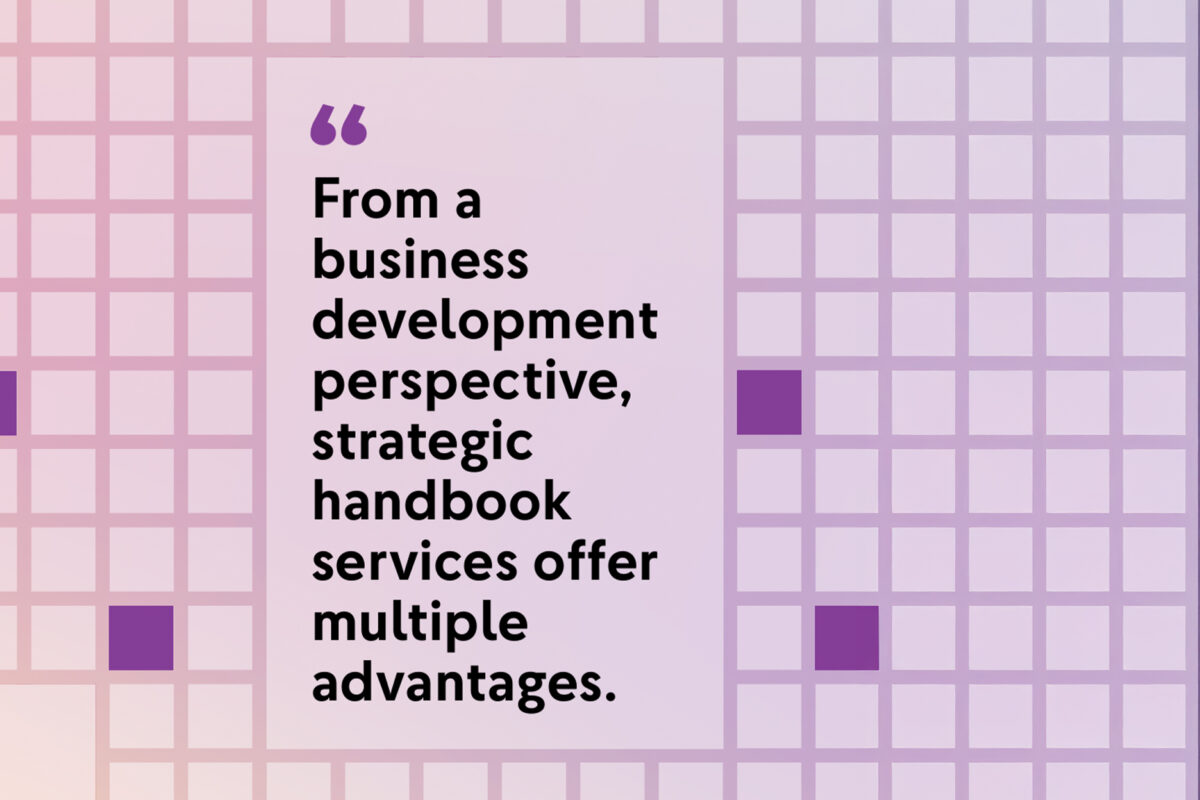
From a business development perspective, strategic handbook services offer multiple advantages.
Strategic screening is essential for protecting your organization’s most valuable assets: your people, your clients, and your intellectual property.
Recognition fuels engagement across age groups. ZayZoon’s Motivating and retaining Gen Z report found that half of Gen Z employees don’t feel heard or valued.
A strong culture doesn’t happen by chance; it’s built on a foundation of trust, transparency, and a shared purpose. Just like the best sports teams, a successful organization has a mission and a set of core values that guide every decision and action.