NAPEO
THE SCALABILITY PARADOX: WHY ADDING CLIENTS SHOULDN’T MEAN ADDING HEADCOUNT
April 2026

The value proposition of the PEO industry has always been clear. Remove administrative burden so small and mid-sized businesses can focus on their core mission. PEOs position themselves as trusted experts who manage the complexity of HR, compliance, and benefits on behalf of their clients.
Yet inside many PEO organizations, a quieter contradiction exists.
While clients are promised relief from administrative overload, internal service teams are often weighed down by it. The professionals responsible for delivering a seamless client experience frequently spend their days buried in manual work that mirrors the very problems PEOs are hired to solve.
These teams are not entry-level administrators. They are experienced practitioners capable of providing thoughtful guidance and strategic support. Still, much of their time is consumed by low-value tasks such as pulling spreadsheets from a client’s HRIS, cleaning up data, and manually entering information into carrier portals. Instead of advising clients, they act as human connectors between systems that should already be integrated.
This dynamic does more than slow things down. It creates a structural limit on growth.
WHY MANUAL PROCESSES CAP SCALABILITY
When a PEO relies on swivel-chair integration, where data only moves because someone manually re-keys it, scale becomes expensive. Each new client and each additional worksite employee require more administrative labor. Headcount grows linearly with revenue, and margins struggle to expand.
Over time, leadership attention shifts toward managing volume instead of improving systems. The organization becomes skilled at handling throughput but not at removing the friction that creates it.
Sustainable scalability requires a different mindset. PEO executives must move away from overseeing data entry and toward building automated, reliable data pipelines. Without that shift, operational drag quietly taxes every stage of growth.
THE HIDDEN COST OF PREMIUM LEAKAGE
For a direct employer, a data error is an inconvenience. For a PEO acting as plan sponsor across thousands of covered lives, it has financial consequences.
One of the most persistent issues is premium leakage. It often goes unnoticed day to day and only becomes visible during reconciliation, but it occurs continuously.
A common example is employee termination. A client submits the update, but the data sits in a queue until a benefits specialist manually processes the change in the carrier portal. That delay may last days or weeks. During that gap, the PEO is often still paying premiums for coverage that should have ended.
Recovering those overpayments after the fact is rarely straightforward. Carrier audits take time, documentation is incomplete, and retroactive adjustments are not guaranteed. In many cases, the money is simply lost.
Automated data connections help close this gap. When terminations flow directly from the system of record to carriers in near real time, premium payments align with actual coverage. The result is stronger margin protection and fewer surprises at year end.
THE MOMENT THAT DEFINES CLIENT TRUST
In a competitive market, retention matters as much as acquisition. Clients rarely leave a PEO because of the technology interface alone. They leave because of friction that shows up in moments that matter.
One of those moments happens at the pharmacy counter.
Imagine a new worksite employee picking up a prescription for their child on a Friday evening. The pharmacist searches for coverage and finds nothing. The enrollment file has not yet been processed.
That frustration does not stay isolated with the employee. It reaches the business owner quickly and undermines confidence in the PEO relationship. No service-level agreement can fully offset that experience.
Reliable, real-time data flow plays a quiet but critical role in retention. When enrollments process automatically, coverage is active when it should be. Support tickets decrease, client frustration declines, and the organization feels dependable. Over time, that consistency builds trust.
FROM MANUAL OVERSIGHT TO EXCEPTION-BASED MANAGEMENT
Automation is not about removing people from the process. It is about allowing people to focus where their expertise actually matters.
Leading PEOs are adopting an exception-based management model. In this approach, clean data flows automatically from the HRIS to carrier systems without human intervention. Before leaving the organization, the data is validated against predefined rules that check for missing Social Security numbers, invalid plan codes, or eligibility conflicts.
Instead of reviewing every record, benefits teams focus only on the small percentage of cases that are flagged as exceptions. Human judgment is applied where it adds value, not where it simply moves information from one place to another.
This shift changes internal roles in meaningful ways. Team members spend less time acting as data entry clerks and more time answering nuanced coverage questions, supporting open enrollment strategy, and providing the consultative service that differentiates a strong PEO partner.
FREEING LEADERSHIP TO FOCUS ON GROWTH
The days of emailing spreadsheets back and forth are fading. Modern PEO technology stacks are moving toward API connectivity and standardized EDI feeds that allow systems to communicate directly and consistently.
For leadership, the implication is straightforward. A scalable, high-margin PEO cannot be built on manual processes at its core. When organizations automate the mechanical work of benefits administration, they remove constraints that quietly limit performance.
Teams gain bandwidth. Errors decrease. Client experiences improve. Leadership is freed to focus on growth, culture, and long-term strategy instead of operational firefighting.
In the end, automation does not weaken the PEO model. It allows it to deliver on its original promise, not just for clients, but for the teams supporting them every day.
-
SHARE
- Copy to clipboard
RELATED ARTICLES
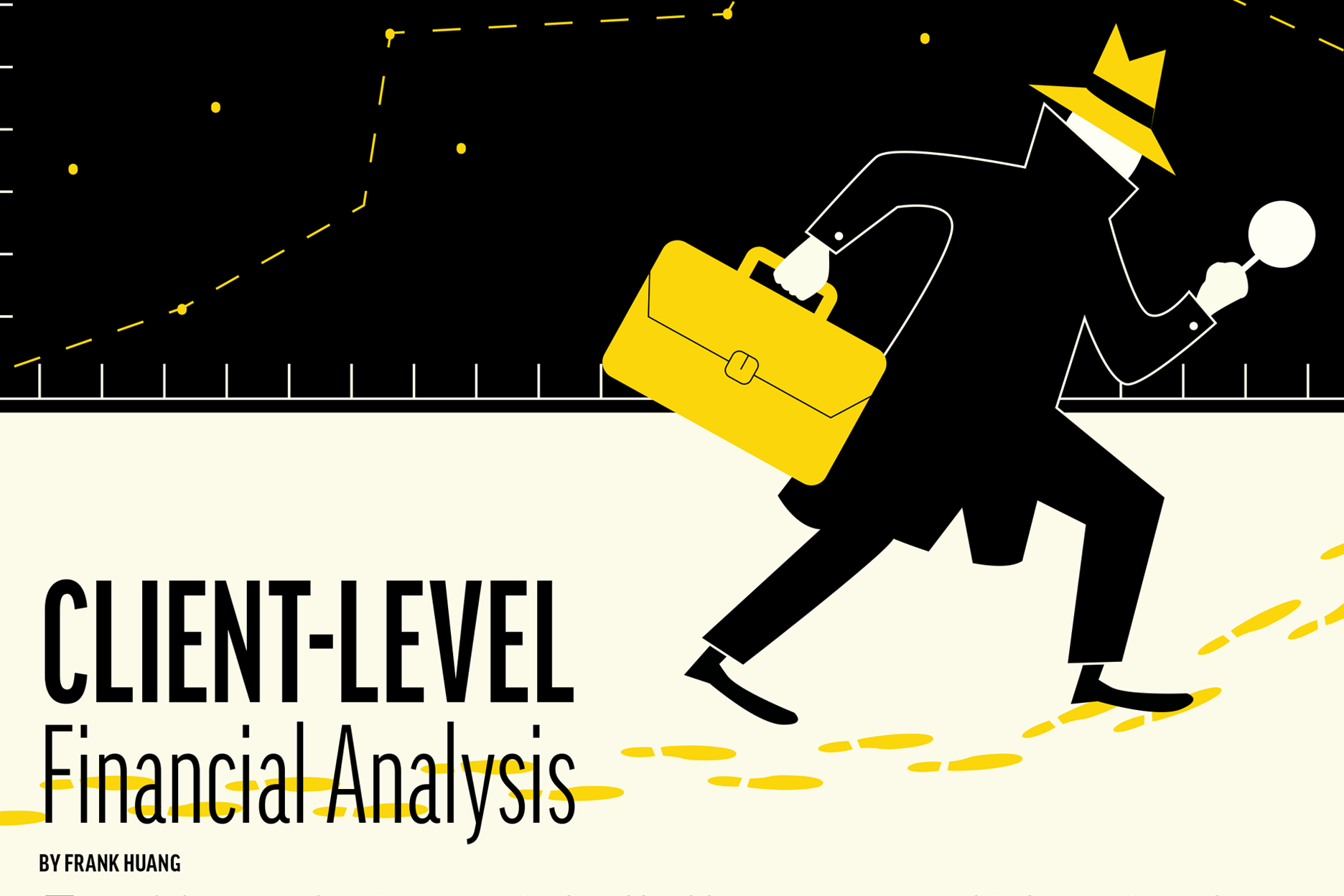
CLIENT-LEVEL FINANCIAL ANALYSIS
If you asked someone in the PEO space what he or she thought of actuarial science a positive response might be reserve analyses or accruals. A negative response might be collateral calls or rate increases. Naturally, the varied reactions stem from whether there is positive or negative news coming from the work of the actuary. Yet, one of the most helpful projects an actuary can perform for a PEO, eliciting either positive and negative reactions, is a client-level financial analysis.
BY FRANK HUANG
June/July 2023
PROFITABILITY ABCs: IT IS AS EASY AS 1-2-3
The article provides some simple guidance for streamlining operations (thus reducing selling, general, and administrative (SGA) costs) and increasing gross profit contribution from their existing client base. For the purpose of this article, we are only exploring pricing strategies that affect client profitability and operating efficiency items that impact select SG&A cost categories. Business development and organic growth are excluded from this discussion.
BY Dan McHenry
June/July 2023
THE 5 Ws OF PEO GENERAL LEDGER RECONCILIATIONS
General ledger reconciliation is a key control to help maintain timely and accurate financial statements in any business. If you speak to accounting or finance professionals in the PEO industry, they will agree that general ledger balance sheet reconciliations are the most telling and critical tools in analyzing a PEO’s fiscal position. Failure to reconcile balance sheet accounts timely and accurately can lead to material losses to the PEO. Let’s explore the 5 W’s of PEO ledger reconciliations.
BY JEAN GOLDSTEIN
JUNE/JULY 2023
UTILIZING METRICS AS A PATH TO IMPROVING OPERATIONALLY OVER TIME
A company’s story is often written succinctly on its website, with details of the company’s history, its values, and its aspirations for the future. Internally, however, company leaders can capture a more telling story. Operational metrics, while often unique to each company, depict a different story.
BY Aaron Call
September 2023ADVERTISEMENT