NAPEO
SCALING WITH CONFIDENCE: WHY THE MOST SUCCESSFUL SMBS DON’T DO IT ALONE.
September 2026
We live in an era where small businesses are scaling faster than ever before. According to NAPEO, SMBs that partner with a PEO grow 7% to 9% faster, experience 10% to 14% lower employee turnover and are 50% less likely to go out of business than their independent peers.
But what does it actually take for a PEO to deliver on that promise?
The answer lies not in the breadth of services a PEO offers, but in the depth of its operational infrastructure, and how well that infrastructure adapts as its clients grow.
THE INFLECTION POINT EVERY GROWING SMB HITS
The journey from startup to mid-market enterprise is rarely smooth. At some point, every growing business hits a critical inflection point, where headcounts multiply; operations expand across state lines, and risk profiles shift faster than existing administrative frameworks can handle.
At this stage, the business owner is no longer just managing a team. They are managing complexity. Payroll obligations multiply. Compliance requirements vary by state. Workers’ comp classifications change as the workforce evolves. And the administrative burden of keeping up with all of it begins to compete directly with the time and energy needed to run the business.
This is the moment when the right PEO partnership becomes transformational, not just helpful, but essential. How can PEOs be ready for this moment when it arrives for their clients?
TURNING OPERATIONAL COMPLEXITY INTO CLARITY
One of the first casualties of rapid growth is visibility. As businesses add new teams, expand into new states, and launch new services, data gets scattered. Payroll costs, claims trends, compliance obligations and workforce data begin to live in separate silos. Leadership finds itself making critical decisions without a clear picture of what is happening inside the business.
Recent perspectives in the Insurance Journal highlight that surviving in today’s fast-paced economy means moving away from reactive decision-making. The most forward-thinking organizations are bringing risk, payroll and claims data under one roof, creating a single, coherent view of operational health.
For PEOs, this is one of the most significant value-add opportunities available. When a PEO can offer its SMB clients a simple, panoramic view of their operations, connecting payroll, compliance, claims and risk data in one place, it transforms the relationship from administrative support to strategic partnership.
Business leaders who can see the health of their company in real time make bolder, more confident scaling decisions. They stop reacting and start anticipating.
PEOs that deliver this kind of visibility can have a very different conversation with their clients: “We noticed a slight shift in your claims frequency this quarter, let’s address it before it impacts your premiums.” Or “As you expand your workforce into Texas, here is exactly how your payroll compliance and workers’ comp obligations will change.”
This is what separates the most effective PEOs from the rest, not just the ability to process information, but the ability to turn complex, evolving data into actionable insight.
BEYOND VISIBILITY: RIGHT-SIZING RISK AT EVERY STAGE
Visibility is only half the equation. The other half is action; specifically, ensuring that every SMB client is in the right workers’ comp program for where they are right now, not where they were when they first onboarded.
This matters more than most business owners realize. A company that has grown from 20 to 200 employees, expanded into new states, or shifted its workforce mix by adding warehouse workers, delivery drivers, or remote employees, has a fundamentally different risk profile than it did two years ago.
A generic, one-size-fits-all program will inevitably hold a dynamic, growing company back. Risk & Insurance magazine recently highlighted how complex the current legal and regulatory landscape has become for expanding employers, noting that PEOs act as an essential backbone for navigating these challenges.
Modern PEOs are addressing this by moving away from static, annual program reviews and toward continuous, data-driven risk alignment. By regularly evaluating each client’s current risk profile for class codes, payroll, claims history and state-specific requirements, PEOs can ensure that their clients are accurately covered, competitively priced and compliantly positioned at every stage of growth.
With targeted risk management, PEOs can:
Eliminate coverage gaps: Ensure clients are neither underinsured nor overinsured as their workforce evolves.
Improve pricing accuracy: Clients placed in the right programs pay the right price – protecting PEO margins and client relationships alike.
Strengthen client confidence: When a client knows their PEO is actively monitoring and adjusting their risk posture, the relationship deepens from transactional to truly strategic.
DATA-DRIVEN RISK MANAGEMENT IS THE NEW STANDARD
In today’s dynamic business environment, data is more than just numbers. It is a window into the health of a client’s business, and a roadmap for where their risk is heading.
PEOs that harness the power of data analytics gain a measurable edge. They can identify emerging claims trends before they become costly problems, anticipate compliance challenges before they become violations, and align clients with better programs before renewal season creates pressure to act.
The most forward-thinking PEOs are already embedding data into every touchpoint of the client relationship, from onboarding and underwriting through to renewal and beyond. The result is a partnership that feels less like outsourced administration and more like having a deeply invested operational partner in your corner.
EMBRACING STRUCTURED INFRASTRUCTURE IS THE WAY AHEAD
AI, automation and integrated technology are reshaping how PEOs operate, underwrite and manage risk for their clients. The PEOs that will define the next decade of this industry are the ones that treat technology not as an add-on, but as the backbone of how they deliver value.
For SMBs, this matters enormously. The business owners who choose a PEO partner are, in many cases, making one of the most consequential operational decisions of their growth journey. They are choosing to trust someone else with the complexity of compliance, risk, and workforce management, so they can focus on building their business.
The future belongs to PEOs that are ready for that responsibility. Not just those that can process the paperwork, but those that can see around corners, anticipate what’s next, and build the resilient, intelligent infrastructure that lets their clients grow with total confidence. That is what it means to help SMBs scale not just faster, but smarter, safer and with the right partner beside them at every milestone.
-
SHARE
- Copy to clipboard
RELATED ARTICLES
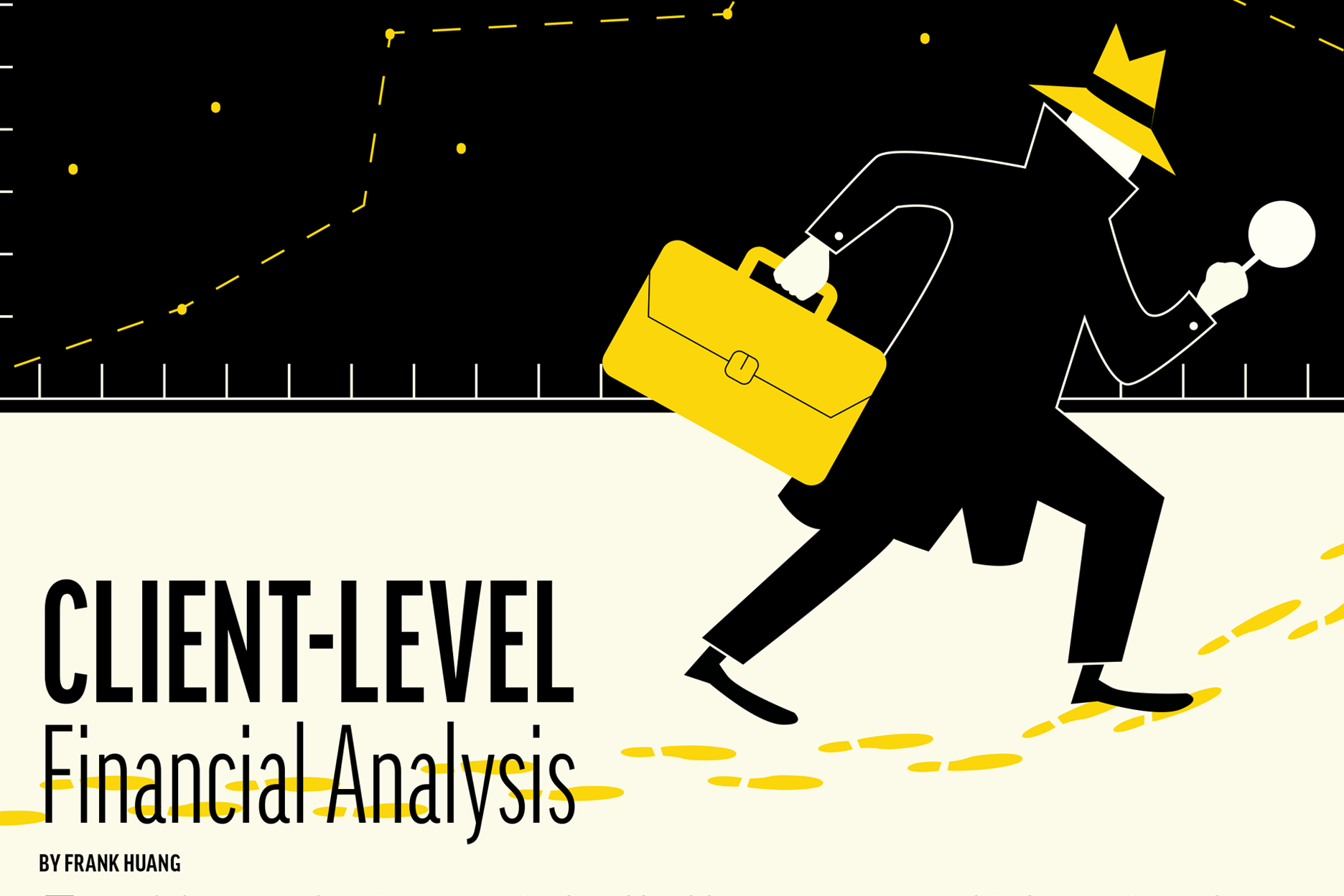
CLIENT-LEVEL FINANCIAL ANALYSIS
If you asked someone in the PEO space what he or she thought of actuarial science a positive response might be reserve analyses or accruals. A negative response might be collateral calls or rate increases. Naturally, the varied reactions stem from whether there is positive or negative news coming from the work of the actuary. Yet, one of the most helpful projects an actuary can perform for a PEO, eliciting either positive and negative reactions, is a client-level financial analysis.
BY FRANK HUANG
June/July 2023
PROFITABILITY ABCs: IT IS AS EASY AS 1-2-3
The article provides some simple guidance for streamlining operations (thus reducing selling, general, and administrative (SGA) costs) and increasing gross profit contribution from their existing client base. For the purpose of this article, we are only exploring pricing strategies that affect client profitability and operating efficiency items that impact select SG&A cost categories. Business development and organic growth are excluded from this discussion.
BY Dan McHenry
June/July 2023
THE 5 Ws OF PEO GENERAL LEDGER RECONCILIATIONS
General ledger reconciliation is a key control to help maintain timely and accurate financial statements in any business. If you speak to accounting or finance professionals in the PEO industry, they will agree that general ledger balance sheet reconciliations are the most telling and critical tools in analyzing a PEO’s fiscal position. Failure to reconcile balance sheet accounts timely and accurately can lead to material losses to the PEO. Let’s explore the 5 W’s of PEO ledger reconciliations.
BY JEAN GOLDSTEIN
JUNE/JULY 2023
UTILIZING METRICS AS A PATH TO IMPROVING OPERATIONALLY OVER TIME
A company’s story is often written succinctly on its website, with details of the company’s history, its values, and its aspirations for the future. Internally, however, company leaders can capture a more telling story. Operational metrics, while often unique to each company, depict a different story.
BY Aaron Call
September 2023ADVERTISEMENT